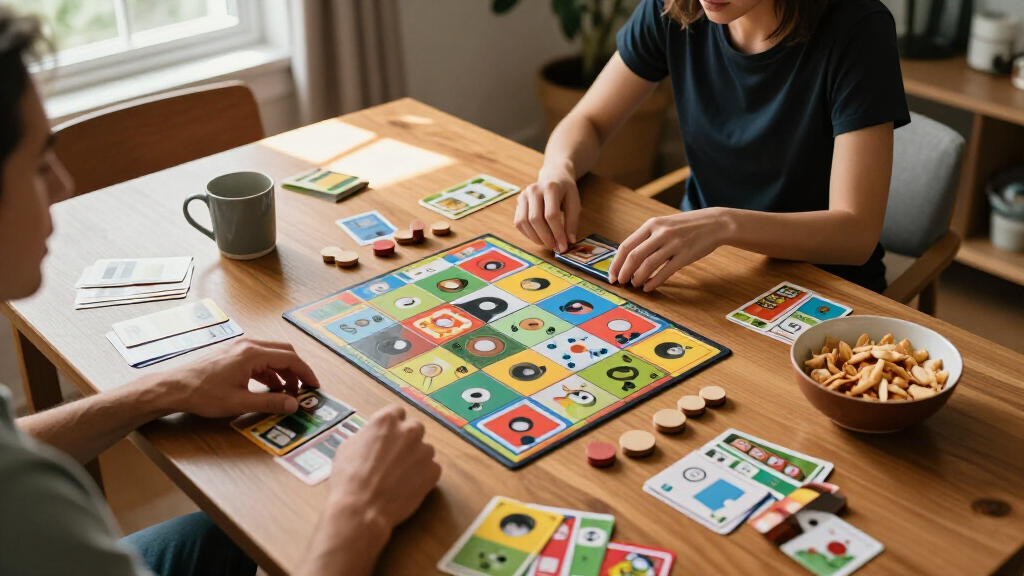

Psychology board games for adults range from light conversation starters to games about emotional skills, relationships, and strategic decision-making. I’d put Unconscious Mind first for players who want a substantial strategy game with psychological themes, while ThinkPsych Dive In stands out for guided conversations and Are We Compatible? for couples. The main tradeoff is between depth and ease: richer gameplay can take longer to learn, while prompt-based games are easier to bring to a group but offer less strategic play. Some options focus on self-reflection, while others are built mainly for humor or social connection. Read on for the full comparison and help matching a game to your group.

Turn your wind-down time into listening time
- Thousands of audiobooks, podcasts and originals
- Listen on your phone, tablet or Echo — also offline
- Cancel anytime
Key Takeaways
- Unconscious Mind is the clearest fit for adults seeking sustained strategy alongside psychological subject matter; most other picks emphasize conversation, humor, or practical reflection.
- ThinkPsych Dive In offers broad discussion prompts, while the coping-skills card deck is a more focused choice for guided self-care activities.
- Are We Compatible? targets couples, but several other games are better suited to friends, family, or mixed groups rather than romantic partners.
- The two Horrible Therapist editions center on irreverent humor, making them a different kind of psychology-themed choice from reflective or skills-focused games.
- The lineup includes both full board-game experiences and compact card, dice, or prompt formats, so group size, session length, and appetite for structure matter as much as theme.
| Horrible Therapist: Extra Horrible Edition by Exploding Kittens |  | Best for Raucous Adult Parties | Players: 3–8 | Recommended age: 17+ | Question cards: 80 | VIEW LATEST PRICE | See Our Full Breakdown |
| Are We Compatible? A Romantic Relationship Card Game by Relatable |  | Best for Couples’ Conversations | Recommended age: 18+ | Number of cards: 200 | Categories: Intimacy; Values & Lifestyle; Planning for the Future; Expressing Love; Wild Cards | VIEW LATEST PRICE | See Our Full Breakdown |
| Better Me Self-Improvement Board Game for Couples, Friends & Family |  | Best for Goal-Setting and Personal Growth | Players: 2–8 | Age range: 13+ | Included components: Cards | VIEW LATEST PRICE | See Our Full Breakdown |
| Psychological Board Game for Friends – Guess How Well You Know Each Other |  | Best for Light Personality Guessing | Players: 6 | Minimum age: 8 years | Language: English | VIEW LATEST PRICE | See Our Full Breakdown |
| Mind Brain Emotion 52 Essential Coping Skills Cards – Self Care Exercises for Stress and Anxiety Relief |  | Best for Individual Coping Practice | Age range: Teens and adults | Set name: 52 Essential Coping Skills Set | Included components: Cards, Online Coping Assessment, Sturdy Tin Case | VIEW LATEST PRICE | See Our Full Breakdown |
| Exploding Kittens Horrible Therapist – Holiday Edition |  | Best for Holiday Party Humor | Players: 2–5 | Age range: 17+ | Game type: Card game | VIEW LATEST PRICE | See Our Full Breakdown |
| ThinkPsych Dive In – SEL Conversation Dice Game with 450+ Topics |  | Best for Guided Conversation | Players: 6 | Components: 8 wooden dice and 52 cards | Topics: 450+ | VIEW LATEST PRICE | See Our Full Breakdown |
| Unconscious Mind |  | Best for Strategy Fans | Players: 1–4 | Minimum age: 12 years | Genre: Strategy | VIEW LATEST PRICE | See Our Full Breakdown |
| You Know Social Skills and Therapy Games |  | Best for Inclusive Conversation | Players: 2–6 | Age range: 7+ | Game type: Therapy card game | VIEW LATEST PRICE | See Our Full Breakdown |
| The Awkward Yeti Anxiety Attack Board Game |  | Best for Lighthearted Anxiety Conversations | Players: 2–6 | Age range: 8+ | Estimated playing time: 25–45 minutes | VIEW LATEST PRICE | See Our Full Breakdown |
| psychology board games for adult | Players | Included components | Age range |
|---|---|---|---|
| Horrible Therapist: Extra Horr | 3–8 | — | — |
| Are We Compatible? A Romantic | — | 1 Compatibility Board, 200 Test Cards, 1 Instruction Sheet | — |
| Better Me Self-Improvement Boa | 2–8 | Cards | 13+ |
| Psychological Board Game for F | 6 | Game board, 250 cards, scoring tiles, character pieces, trophy | — |
| Mind Brain Emotion 52 Essentia | — | Cards, Online Coping Assessment, Sturdy Tin Case | Teens and adults |
| Exploding Kittens Horrible The | 2–5 | — | 17+ |
| ThinkPsych Dive In | 6 | — | — |
| Unconscious Mind | 1–4 | Meeting Board, Map Board, Insight Dials, Client Cards, Dream Cards, tokens, markers, and rulebooks | — |
| You Know Social Skills and The | 2–6 | Cards | 7+ |
| The Awkward Yeti Anxiety Attac | 2–6 | — | 8+ |
More Details on Our Top Picks
Horrible Therapist: Extra Horrible Edition by Exploding Kittens
Horrible Therapist: Extra Horrible Edition uses therapy-themed Question, Answer, and Treatment cards as a setup for irreverent comic-making, not as a tool for actual self-reflection. Its large card mix gives groups plenty of ways to build absurd scenarios, making it a livelier party choice than Are We Compatible?, which centers on personal conversations between two partners. The rules are easy to pick up, so it suits a group that wants to start playing quickly rather than learn a layered strategy game. The tradeoff is its deliberately adult, potentially offensive humor: it may land poorly with players who expect sensitive or realistic treatment of mental health. It also needs at least three players to deliver its intended group dynamic, and it is less suited to a quiet or introspective evening.
Pros:- Three types of cards support many combinations and repeat play.
- Simple setup and rules make it accessible for casual party groups.
- Designed for groups of three to eight adults.
- Therapy themes give the humor a distinct premise compared with general party games.
Cons:- The humor may be offensive or uncomfortable for some players.
- Its comedy format is not a substitute for psychology or therapy activities.
- It does not support a two-player game.
Best for: Adults planning a lively game night who enjoy irreverent humor and want a quick, group-driven card game.
Not ideal for: Players seeking genuine therapeutic reflection, gentler humor, or a game for two; its jokes can offend, and it is designed for groups of three or more.
- Players:3–8
- Recommended age:17+
- Question cards:80
- Answer cards:158
- Treatment cards:200
- Format:Adult card game
Our verdict“Choose it for a larger adult group that wants therapy-themed comedy, not serious psychological discussion.”
Are We Compatible? A Romantic Relationship Card Game by Relatable
Are We Compatible? is the most relationship-focused pick here: its five prompt categories invite partners to talk about intimacy, values, future plans, and ways of expressing love. That makes it a better fit for a date night than Better Me, whose personal-development activities can involve a wider mix of players and real-world goals. The 200 test cards provide variety, but the core appeal is the conversation they prompt, not scoring or competitive play. This focus is also its limitation. Partners looking for a breezy party game may find the questions too personal, while people who already know each other’s answers may get less from repeat sessions. It is for adults 18 and up and is designed around couples, so it is not a flexible choice for mixed groups.
Pros:- Five subject categories guide couples into a range of relationship conversations.
- 200 cards offer a substantial pool of prompts.
- Designed for date nights, anniversaries, and partner-focused gifting.
- The prompt-based format makes conversation the main activity rather than competition.
Cons:- Some prompts may feel too personal or intense for a couple.
- Its partner focus limits use with friends or larger groups.
- Not a fit for players who want light, low-disclosure entertainment.
Best for: Adult couples who want structured prompts for discussing values, affection, and future plans during a date night.
Not ideal for: Players seeking a party game, a strategy challenge, or casual prompts; its couple-centered questions can feel too intimate for some.
- Recommended age:18+
- Number of cards:200
- Categories:Intimacy; Values & Lifestyle; Planning for the Future; Expressing Love; Wild Cards
- Included components:1 Compatibility Board, 200 Test Cards, 1 Instruction Sheet
- Brand:WHAT DO YOU MEME?
- Model number:UCQ4132
Our verdict“Pick it when you want a couples’ conversation starter; choose Horrible Therapist instead for a group party game.”
Better Me Self-Improvement Board Game for Couples, Friends & Family
Better Me is the strongest match for players who want psychology-themed play to lead to reflection and action: its activities emphasize personal development, emotional awareness, goal setting, and accountability. Unlike Are We Compatible?, which keeps attention on a couple’s relationship prompts, this game is described for two to eight players and can suit friends or family as well as partners. Its age guidance starts at 13, making it more adaptable for mixed-age groups than the adult-only Horrible Therapist. That broader purpose comes with a tradeoff: the experience depends on players being willing to discuss personal topics and follow through on real-world actions. The available details also give less specifics about the cards and activity structure, and similar exercises may feel repetitive over time.
Pros:- Combines conversation with goal setting and real-world accountability.
- Supports two to eight players, making it more flexible than a couples-only game.
- Age guidance from 13 years allows some mixed-age play.
- Can be used for personal development, date nights, or facilitated discussions.
Cons:- Players need to be comfortable with personal reflection and follow-up actions.
- Activities may feel repetitive to groups that play often.
- Younger players may need adult guidance with some topics.
Best for: Couples, friends, or families with teens who want guided self-reflection, goal setting, and accountability in a shared activity.
Not ideal for: Groups looking for fast, purely humorous play or a highly competitive game; reflective activities may feel repetitive or require personal disclosure.
- Players:2–8
- Age range:13+
- Included components:Cards
- Material:Cardstock
- Dimensions:10 × 10 × 2.75 inches
- Item weight:3.2 pounds
- Product style:Personal Development
- Container:Box
Our verdict“Choose Better Me for a group willing to turn conversation into personal goals, rather than a quick party-game session.”
Psychological Board Game for Friends – Guess How Well You Know Each Other
Psychological turns personality into a social guessing challenge: players predict how strongly friends identify with two traits on a scale of one to ten. That makes it lighter and more game-like than Better Me, which asks players to focus on personal growth and follow-through. Its simple premise and supplied board, cards, tiles, pieces, and trophy give the group a clear shared activity without requiring the intimate, couple-centered disclosures in Are We Compatible? The result is better for laughter and comparing impressions than for deep self-examination. Trait reading and interpretation still matter, so it may not suit players who dislike discussing personality labels; the description also lists six players, making it a poor fit for larger gatherings. Its age guidance begins at eight, so adult groups should expect a broad, accessible tone rather than mature psychological depth.
Pros:- Trait-pair guessing prompts players to compare perceptions and self-image.
- Simple rules support casual play across age groups.
- Includes a board, cards, scoring tiles, character pieces, and a trophy.
- Offers a more structured group-game format than conversation-only options.
Cons:- The listed player count is limited to six.
- Trait ratings may not appeal to players who dislike labeling personality.
- Its light party format offers less depth than Better Me’s self-development activities.
Best for: Adults who want a light personality-themed game for a small group of friends or family, with guessing and discussion rather than deep disclosure.
Not ideal for: Larger groups, players wanting serious self-development, or anyone who dislikes rating personality traits; the listed maximum is six players.
- Players:6
- Minimum age:8 years
- Language:English
- Genre:Party
- Included components:Game board, 250 cards, scoring tiles, character pieces, trophy
- Brand:PlayMonster
- Model number:26139
Our verdict“Choose Psychological for casual personality guessing with a small group, not for an intensive psychology or self-help experience.”
Mind Brain Emotion 52 Essential Coping Skills Cards – Self Care Exercises for Stress and Anxiety Relief
Mind Brain Emotion 52 Essential Coping Skills Cards differs from the other picks because it is an exercise deck, not a conventional board game. Its cards draw on CBT, mindfulness, meditation, and somatic approaches to offer practical coping activities for teens and adults. Compared with Psychological, which turns personality traits into a social guessing game, this deck is oriented toward stress management and can be used alone or in a group setting. A tin case makes the cards portable, and the online coping assessment adds a resource beyond the physical deck. The tradeoff is less of a game-night structure: there are no described turns, scoring, or board-based challenge, and users may need prior familiarity with coping methods to get the most from the exercises. It can support self-care, but it is not a replacement for professional mental health care.
Pros:- Includes exercises drawing on CBT, meditation, mindfulness, and somatic approaches.
- Portable tin case supports use outside the home.
- Can be used for individual practice, group activities, or as a therapy aid.
- Includes an online coping assessment.
Cons:- It is a card-based exercise set, not a board game with conventional gameplay.
- Some users may need familiarity with coping techniques to apply the activities.
- May need supplementary tools or professional guidance for some needs.
Best for: Teens and adults who want portable prompts for practicing coping and mindfulness skills individually, in a group, or alongside therapy.
Not ideal for: Buyers specifically seeking a competitive board game or a complete guided treatment program; the deck’s exercises may need context or additional support.
- Age range:Teens and adults
- Set name:52 Essential Coping Skills Set
- Included components:Cards, Online Coping Assessment, Sturdy Tin Case
- Material:Cards
- Manufacturer:Mind Brain Emotion
- Card count:52 essential coping skills cards
Our verdict“Choose this deck for portable coping-skill practice, and choose Psychological or Horrible Therapist for a more conventional group game.”
Exploding Kittens Horrible Therapist – Holiday Edition
Horrible Therapist Holiday Edition puts comic scenarios ahead of serious psychological discussion: players combine question, answer, and treatment cards to create deliberately ridiculous takes on therapy. Its holiday theme and artwork make it a seasonal fit for adults who want laughs and a loose conversation starter, rather than a structured way to explore emotions. Compared with The Awkward Yeti Anxiety Attack Board Game, this is more about assembling punchlines than talking through coping strategies; You Know is a better match for groups seeking thoughtful prompts. The 90 Treatment, 40 Question, and 70 Answer cards offer plenty of combinations, but the humor can miss with people who dislike therapy jokes. Its 17+ age guidance and two-to-five-player range also make it less flexible for mixed-age or larger gatherings.
Pros:- Holiday-themed cards give seasonal gatherings a distinct comedic angle
- Three types of cards support varied scenario combinations
- Original artwork by The Oatmeal adds a recognizable visual style
- Designed for adult game nights and repeat combinations
Cons:- Therapy humor may feel insensitive or uncomfortable to some players
- The two-to-five-player range limits its use at larger gatherings
- Its 17+ age guidance rules it out for younger family groups
Best for: Adult holiday hosts who want a compact, irreverent card game for a small group comfortable with therapy-themed jokes
Not ideal for: Mixed-age family gatherings, larger parties, or players seeking supportive mental-health conversation rather than comedy
- Players:2–5
- Age range:17+
- Game type:Card game
- Treatment Cards:90 holiday-themed
- Question Cards:40
- Answer Cards:70
- Model year:2026
- Set name:Horrible Therapist Holiday Edition
Our verdict“Choose it for a small adult group that wants holiday-themed therapy parody, not a sincere psychology or coping-skills game.”
ThinkPsych Dive In – SEL Conversation Dice Game with 450+ Topics
ThinkPsych Dive In is the most structured conversation option in this group: its dice and cards prompt social-emotional discussion, with two levels of play to adjust how participants engage. That makes it a better fit for facilitated settings than You Know Social Skills and Therapy Games, which uses question cards without the same dice-based format. The focus here is on social skills, emotional awareness, and self-expression, not adult strategy or comic scenarios like Horrible Therapist Holiday Edition. Designed by psychologists and listed for use in therapy, classrooms, and families, it can help a group get past the awkwardness of choosing a topic. The tradeoff is that its stated audience is children and teens, so adults seeking a dedicated psychology board game may find the prompts more educational than challenging. It is also a cooperative, hands-on conversation activity, not a competitive tabletop game.
Pros:- Dice and cards create varied conversation prompts
- Two levels of play allow different approaches to discussion
- Designed by psychologists for social-emotional learning
- Suited to therapy, classroom, and family settings
Cons:- Its child-and-teen focus may feel basic for adult-only groups
- Conversation-led play offers little competitive or strategic depth
- Manual dice and card handling requires active facilitation
Best for: Counselors, educators, and families who want a facilitated social-emotional conversation activity for children or teens
Not ideal for: Adults seeking strategic gameplay or mature, psychologically complex discussion prompts
- Players:6
- Components:8 wooden dice and 52 cards
- Topics:450+
- Levels of play:Two
- Genre:Cooperative
- Educational objective:Social and emotional learning
- Setting:Indoor
- Dimensions:3.5 x 3.15 x 3 inches
Our verdict“Pick Dive In when guided social-emotional discussion matters more than adult-focused strategy or party play.”
Unconscious Mind
Unconscious Mind is the clearest pick here for adults who want an actual strategy board game with a psychology theme. Players act as psychoanalysts in Vienna, using worker placement, card drafting, and engine building to pursue insights; the cascading effects reward planning more than quick improvisation. That gives it a very different feel from The Awkward Yeti Anxiety Attack Board Game, which uses humor and emotional triggers for a shorter, more accessible session. It also offers more strategic depth than the conversation-focused You Know. The tradeoff is a substantial learning commitment and a listed playtime of up to 120 minutes, which can be a poor fit for casual game nights. Its psychoanalytic setting gives the mechanisms thematic context, but buyers should expect a euro-style strategy experience, not a therapy tool or direct lesson in psychology.
Pros:- Worker placement and engine building provide substantial strategic play
- Psychoanalyst roles tie the theme to the game’s actions
- Supports solo play as well as groups of up to four
- Dream and client cards add thematic variety
Cons:- Rules and interacting systems can be demanding for newcomers
- A play session can run as long as 120 minutes
- The strategy-game focus does not make it a direct mental-health or therapy activity
Best for: Adult board-game groups who enjoy worker placement and engine building and want those mechanics wrapped in psychoanalytic themes
Not ideal for: Casual players seeking quick, easy-to-teach emotional conversation or a short party game
- Players:1–4
- Minimum age:12 years
- Genre:Strategy
- Mechanisms:Worker placement and engine building
- Estimated playtime:120 minutes
- Edition:Standard Edition
- Included components:Meeting Board, Map Board, Insight Dials, Client Cards, Dream Cards, tokens, markers, and rulebooks
- Manufacturer:Lucky Duck Games
Our verdict“Choose Unconscious Mind for a long, thoughtful strategy session with psychoanalytic flavor, not for casual emotional check-ins.”
You Know Social Skills and Therapy Games
You Know focuses on communication, self-esteem, and positive relationships through question-led card play. Its broad age range and two-to-six-player format make it a flexible choice for families or counseling groups that include children, teens, and adults. Compared with ThinkPsych Dive In, it keeps the materials simple—cards rather than dice and multiple play levels—so it may be easier to bring into an informal conversation. It is also a more sincere, supportive option than Horrible Therapist Holiday Edition, whose therapy premise is played for comedy. That accessibility comes with limits: the listing does not provide a question count or playtime, so buyers cannot gauge the variety or session length from the product details. Repeated use may also make prompts feel familiar, and younger players may need an adult to guide sensitive discussions.
Pros:- Supports conversation about communication, self-esteem, and relationships
- Suitable for children, teens, and adults
- Works in family, classroom, and counseling settings
- Small card format is easy to store and bring along
Cons:- The product details do not specify card count or estimated playtime
- Prompts may feel repetitive after frequent use
- Younger participants may need adult guidance with personal questions
Best for: Families, counselors, and educators who need a straightforward question-card activity for mixed-age groups
Not ideal for: Adult groups wanting strategic mechanics, a highly specified prompt library, or a game aimed only at mature players
- Players:2–6
- Age range:7+
- Game type:Therapy card game
- Included components:Cards
- Material:Cardstock
- Item weight:7 ounces
- Dimensions:3.54 x 2.68 x 1.42 inches
- Brand:Therapy U
Our verdict“Choose You Know for accessible, supportive conversation across age groups, while skipping it if your group wants deeper strategy or fresh mechanics.”
The Awkward Yeti Anxiety Attack Board Game
The Awkward Yeti Anxiety Attack Board Game pairs humor with a theme of anxiety triggers and coping skills, giving groups a playful route into conversations about feelings. Its two-to-six-player range and 25-to-45-minute playtime make it easier to fit into a casual gathering than Unconscious Mind, which asks players to commit to a longer strategy session. It is also more focused on emotional themes than Horrible Therapist Holiday Edition, whose comedy centers on making absurd therapy scenarios. The dark humor may help some groups discuss difficult topics without a formal tone, but it can also land poorly for players who find anxiety a sensitive subject. Although suitable from age eight, that broad age guidance does not mean every group will welcome the jokes. Treat it as a conversation-oriented game, not therapeutic support.
Pros:- Anxiety and coping themes give the humor a clear conversation focus
- Shorter playtime suits casual game nights
- Supports groups of two to six players
- Age guidance allows play with older children and adults
Cons:- Dark humor may feel uncomfortable or dismissive to some players
- The game should not be treated as a substitute for mental-health support
- Playing time varies from 25 to 45 minutes
Best for: Small groups of adults, teens, or families who can enjoy dark humor while discussing anxiety and coping
Not ideal for: Players looking for a gentle or clinical mental-health resource, or groups sensitive to jokes about anxiety
- Players:2–6
- Age range:8+
- Estimated playing time:25–45 minutes
- Theme:Humor
- Material:Paper
- Color:Purple
- Dimensions:7 in L x 21 in W
Our verdict“Pick it for a casual group comfortable with dark humor that wants to talk about anxiety, not for a sensitive or clinical setting.”
How We Picked
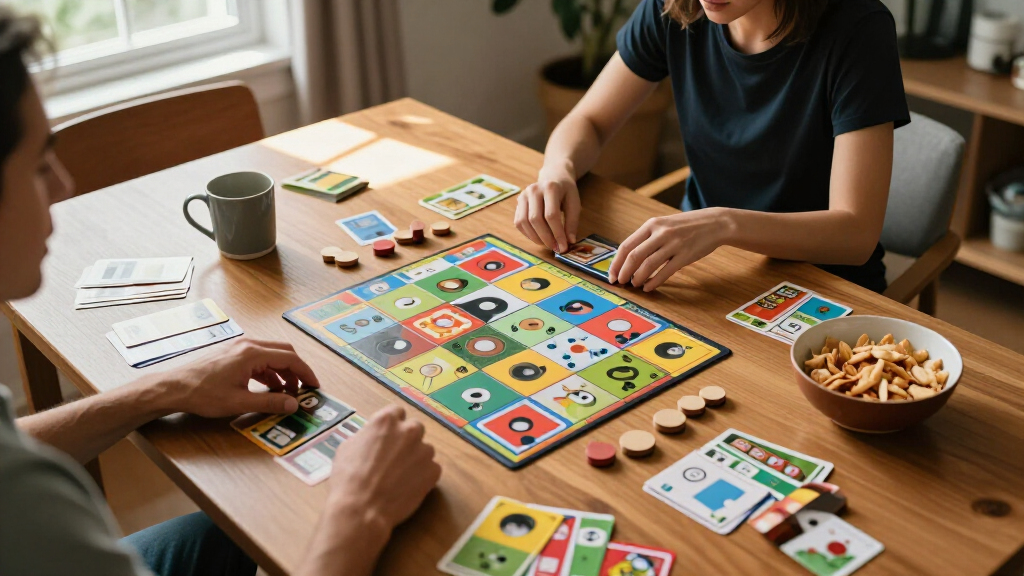
I compared these ten options by how directly their play connects to psychology-related interests: understanding people, discussing relationships, exploring emotions, practicing coping skills, or making decisions through strategy. I also considered how readily adults can get started, whether a game gives a group a clear activity or relies on players to create the discussion, and how well its format suits couples, friends, family, or solo self-guided use.
The order favors products with a distinct and useful fit for adult players, not simply the strongest psychology label. Unconscious Mind leads for its strategy-led approach, while guided conversation and relationship games rank highly for groups wanting an easy social session. Humor-led options and specialized skills tools serve narrower needs, so they rank below flexible picks for a broad adult audience. These products are not all the same kind of game; I treat that variety as a buyer choice rather than implying they are interchangeable.
Factors to Consider When Choosing Psychology Board Games For Adults
Before choosing, decide what you want the game to do for the group. A psychology theme can mean strategic play, personal conversation, emotional-skills practice, or simply comedy built around therapy and behavior. The right fit depends on how much structure players want and how comfortable they are sharing personal thoughts.
Choose the kind of psychology you actually want
Start by separating psychology as a theme from a game intended to support reflection or skill practice. A strategy game may explore psychological ideas without prompting personal disclosure, while a conversation deck may ask players to talk about feelings without offering much competitive play. Humor-based therapy games are yet another choice: their appeal comes from comic situations, not formal therapeutic guidance. A common mistake is buying based on the word “psychology” alone and expecting every format to deliver the same experience. Match the activity to your goal before comparing components or topic counts.
Match the disclosure level to your group
Think about how well players know one another and how willing they are to discuss personal topics. Couples may welcome questions about compatibility, while a work gathering or new-friend group may prefer lighter prompts or strategy that does not ask for intimate answers. Adults can enjoy meaningful discussion without agreeing to share private experiences, so check whether the rules allow players to pass or keep responses brief. Avoid treating a game as a substitute for therapy or as a way to diagnose someone. For a mixed-comfort group, choose a format with enough variety to let people participate at their own pace.
Consider structure, complexity, and session length
A rules-heavy board game asks players to learn systems and stay engaged across a longer session; cards and dice can be easier to introduce between dinner and other plans. That convenience has a tradeoff: a prompt-based format may depend on the group to keep the conversation moving, while a structured game supplies more direction. Consider who will explain the rules and whether the group enjoys learning a new game together. If your gatherings are short or irregular, a compact activity may see more use than a large game that needs a dedicated evening. If strategy is the draw, do not mistake faster setup for a better fit.
Look beyond the player count on the box
Player count does not tell the whole story: the same number of people can create very different dynamics depending on whether the game is cooperative, competitive, or conversation-led. A couple-focused game may feel natural with two players but less useful at a larger gathering, while broad prompts can work across a wider social circle. Consider whether quieter players get room to contribute and whether the activity still works if someone prefers to observe. If you host different kinds of groups, choose for the group you play with most often rather than the rare maximum-sized gathering. Versatility matters only when it matches the people you actually invite.
Pay for depth only when your group will use it
A more involved game can reward repeat sessions with strategy and changing decisions, but it also asks for more attention and commitment. A compact deck or dice set may be the more practical choice if you want a low-preparation activity for occasional gatherings. Conversely, a small prompt set may feel thin to players hoping for a lasting game night centerpiece. Think about repeatability, not just the first session: do you want fresh strategic challenges, many conversation starters, or a specific set of coping exercises? Spending more on complexity makes sense when the group enjoys replaying and learning systems; simplicity can be the better value when flexibility is the priority.
Treat self-help claims with sensible boundaries
Games and activity cards can offer prompts for discussion or exercises to try, but they should not be treated as clinical care. Check whether the content is framed as general self-reflection, social-emotional learning, or entertainment, since those purposes call for different expectations. If a player is dealing with significant distress, a game is not a replacement for support from a qualified professional. For casual use, choose material that feels comfortable and relevant rather than assuming a psychology label guarantees evidence-based guidance. Clear expectations help keep a thoughtful activity from turning into unwanted advice-giving.
Frequently Asked Questions
Which option is best if our group wants strategy rather than personal questions?
Unconscious Mind is the most direct fit in this lineup for adults who want a substantial strategy-led experience with psychological themes. It differs from the prompt and relationship games, where conversation is often the main activity. Before choosing it, check that your group enjoys learning rules and settling in for a longer game session. If the group prefers quick rounds or spontaneous discussion, a card or dice format may be easier to bring out. The psychology connection alone does not tell you how strategic a game feels, so prioritize the play style.
Can a psychology-themed game help with anxiety or other mental health concerns?
Some products here offer coping prompts or self-care exercises, but a game is not a treatment plan or a replacement for professional support. The Mind Brain Emotion cards are the most directly focused on coping skills in this selection, while other options are mainly social, strategic, or comedic. Use an activity only if its tone and prompts feel appropriate to the people playing. No one should be pressured to share private details or explain a mental health condition to the group. If distress is affecting daily life, a qualified professional is a better source of care.
What should I choose for a couple who wants to talk about their relationship?
Are We Compatible? is the most specifically couple-oriented option here, so it is a natural place to start when relationship discussion is the goal. Before buying, consider whether both people enjoy answering direct questions and comparing perspectives. A lighter social game may be more comfortable if one partner dislikes structured relationship prompts. Agreeing that either person can skip a question can keep the activity relaxed rather than turning it into a test. Choose based on the kind of conversation you both want, not on the assumption that a game can resolve relationship problems.
Are the therapy-themed games suitable for a serious self-reflection session?
Not all therapy-themed games are designed for serious reflection. The Horrible Therapist editions lean toward irreverent humor, which can suit a group looking for comedy but may be a poor fit for a sensitive or earnest conversation. For guided discussion, look instead at prompt-based options such as ThinkPsych Dive In; for coping exercises, the skills cards have a more focused purpose. Check the tone and intended activity before inviting a group that includes people with different comfort levels. A psychology reference in a title does not guarantee a therapeutic approach.
Which format works best if I need something easy to bring to a mixed group?
Compact cards or dice are often easier to introduce than a full strategy board game, especially when guests arrive at different times or have limited experience with games. ThinkPsych Dive In is geared toward conversation, while the social and relationship games offer other prompt-led approaches. The tradeoff is that flexible formats may rely on a host to choose questions and manage the pace. For a group that wants clear rules and a shared objective, a more structured game may work better even if setup takes longer. Consider the group’s comfort with discussion as well as portability.
Conclusion
For the broadest blend of psychology themes and sustained play, I’d choose Unconscious Mind as the best overall, especially for adults who enjoy strategy. For a best-value-style pick focused on practical use rather than elaborate gameplay, the Mind Brain Emotion coping-skills cards make sense for guided self-care activities; buyers seeking social conversation should look at ThinkPsych Dive In. Beginners and groups that want an easy starting point can favor prompt-led play over a rules-heavy board game, with ThinkPsych Dive In the most straightforward conversation-oriented fit. Couples should start with Are We Compatible?, while adults who want comedy rather than reflection may prefer a Horrible Therapist edition. Choose by the experience your group wants—strategy, connection, coping practice, or humor—rather than expecting every psychology-themed product to serve the same purpose.
Fall Picks
fall essentials
As an affiliate, we earn on qualifying purchases.