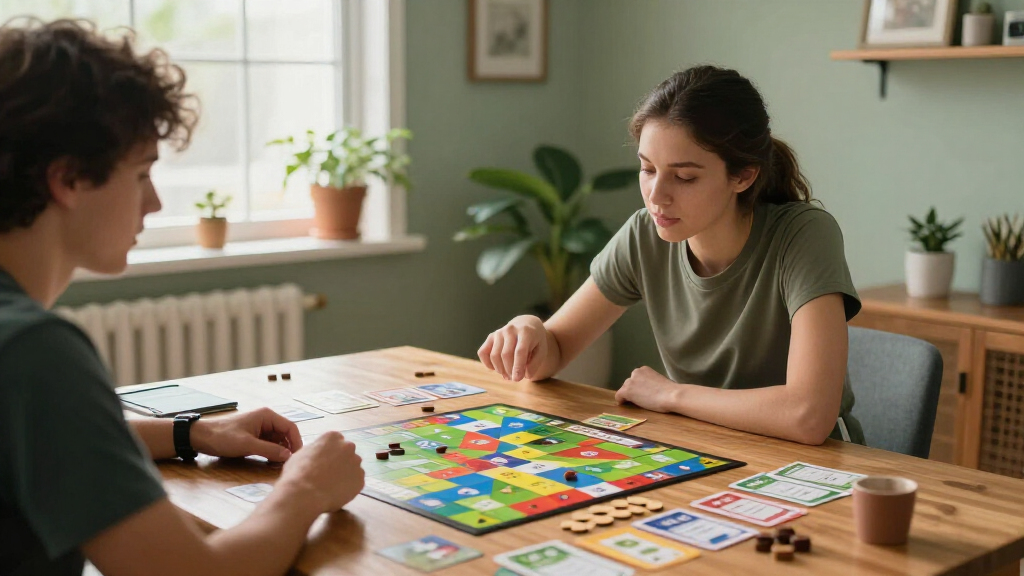

Psychology board games span two very different worlds: therapy tools designed to build social-emotional skills, and strategy party games that play with perception, empathy, and mental health themes for fun. For the best overall balance, ThinkPsych Dive In stands out with 450+ conversation topics that work across kids, teens, and adults. If you want a true gamer’s experience, Unconscious Mind offers deep strategy rooted in actual psychological theory, while The Empathy Game is the gentlest entry point for couples and close friends. The main tradeoff in this category is depth versus accessibility — clinical-grade therapy games rarely entertain mixed groups, and the funniest options often have little therapeutic substance. Read on for the full breakdown of which game fits your table.

Turn your wind-down time into listening time
- Thousands of audiobooks, podcasts and originals
- Listen on your phone, tablet or Echo — also offline
- Cancel anytime
Key Takeaways
- The category splits cleanly into three camps — clinical SEL tools for therapists, conversation-based connection games, and strategy games with psychological themes — and no single product does all three well.
- ThinkPsych Dive In earned the top spot because its 450+ topics scale across ages 8 through adult, giving it the widest usable audience of anything in the lineup.
- Age labels matter more here than in most board game categories: the therapy games for kids (SkillEase CHILL, Breaking Barriers Down) genuinely lose teens, while adult titles like Split Decision and Horrible Therapist are strictly 17+.
- Unconscious Mind and Side Effects are the only picks that satisfy hobby gamers — everything else prioritizes conversation or emotional learning over mechanics.
- Games with replayable, randomized prompts (Dive In, Head Rush) hold up over repeat sessions far better than fixed-path games like Better Me, which can feel scripted after a few plays.
| Are We Compatible? A Romantic Relationship Card Game by Relatable |  | Best for Couples | Number of Cards: 200 | Categories: Intimacy, Values & Lifestyle, Planning for the Future, Expressing Love, Wild Cards | Included Components: Compatibility Board, 200 Test Cards, Instruction Sheet | VIEW LATEST PRICE | See Our Full Breakdown |
| SkillEase CHILL Anger Management for Kids, Ages 5-9 |  | Best for Young Kids (Ages 5-9) | Number of Players: 4 | Game Mechanics: Card-driven, cooperative, linear progression | Educational Objective: Teach emotional regulation and social skills in children aged 5-9 | VIEW LATEST PRICE | See Our Full Breakdown |
| Head Rush – Social Skills Games and Therapy Games |  | Best for Teens | Age Range: 12 years and up | Number of Players: 3+ | Unit Count: 108 cards | VIEW LATEST PRICE | See Our Full Breakdown |
| You Know Social Skills Games and Therapy Games |  | Best Value Pick | Number of Cards: 108 | Players: 2-6 | Ages: 7+ | VIEW LATEST PRICE | See Our Full Breakdown |
| ThinkPsych Dive In – SEL Conversation Dice Game with 450+ Topics |  | Best for Therapy Sessions | Number of Players: Up to 6 | Components: 8 wooden dice, 52 cards | Conversation Topics: 450+ | VIEW LATEST PRICE | See Our Full Breakdown |
| Mindfulness Therapy Game – Teaches Social Skills, Self Care & More for Kids, Teens & Adults (50 Cards) |  | Best for Group Therapy Sessions | Brand: Allura & Arcia | Card Count: 50 cards | Educational Objective: Cognitive, emotional regulation, social skills | VIEW LATEST PRICE | See Our Full Breakdown |
| Exploding Kittens Horrible Therapist – Holiday Edition |  | Best Party Pick (Therapy-Themed, Not Therapy) | Manufacturer: Exploding Kittens | Age Range: 17+ | Players: 2-5 | VIEW LATEST PRICE | See Our Full Breakdown |
| The Empathy Game: Playfully Connect on a Deeper Level |  | Best for Couples and Deep Conversation | Format: Conversation-based card game | Focus: Empathy and emotional connection | Play Style: Cooperative, non-competitive | VIEW LATEST PRICE | See Our Full Breakdown |
| Better Me Self-Improvement Board Game for Couples, Friends & Family |  | Best Full Board Game for Personal Growth | Players: 2 to 8 | Age Range: 13 years and up | Components: Game board materials, cards | VIEW LATEST PRICE | See Our Full Breakdown |
| Breaking Barriers Down – Social Skills and Therapy Game for Kids |  | Best Value for Young Kids’ Emotional Learning | Age Range: Up to 7 years (per manufacturer) | Players: Up to 6 | Components: Game board, cards, dice, tokens | VIEW LATEST PRICE | See Our Full Breakdown |
| Unconscious Mind |  | Best Heavy Strategy Pick | Brand: Lucky Duck Games | Genre: Strategy | Number of Players: 1-4 | VIEW LATEST PRICE | See Our Full Breakdown |
| Psychological – The Social Perception Board Game |  | Best for Family Connection | Brand: PlayMonster | Genre: Party | Number of Players: Up to 6 | VIEW LATEST PRICE | See Our Full Breakdown |
| Viral Studios Split Decision Board Game |  | Best Adult Party Game | Brand: Viral Studios | Genre: Party | Number of Players: 3+ | VIEW LATEST PRICE | See Our Full Breakdown |
| Side Effects: Strategic Take That Card Game of Therapy |  | Best Fast-Paced Strategy Pick | Manufacturer: Pillbox Games | Genre: Card Game / Strategy | Number of Players: 2-8 | VIEW LATEST PRICE | See Our Full Breakdown |
| psychology board game | Number of Players | Age Range |
|---|---|---|
| Are We Compatible? A Romantic | — | — |
| SkillEase CHILL Anger Manageme | 4 | — |
| Head Rush | 3+ | 12 years and up |
| You Know Social Skills Games a | — | — |
| ThinkPsych Dive In | Up to 6 | — |
| Mindfulness Therapy Game | — | Kids, teens, and adults |
| Exploding Kittens Horrible The | — | 17+ |
| The Empathy Game: Playfully Co | — | — |
| Better Me Self-Improvement Boa | — | 13 years and up |
| Breaking Barriers Down | — | Up to 7 years (per manufacturer) |
| Unconscious Mind | 1-4 | — |
| Psychological | Up to 6 | — |
| Viral Studios Split Decision B | 3+ | 17+ |
| Side Effects: Strategic Take T | 2-8 | 14+ |
More Details on Our Top Picks
Are We Compatible? A Romantic Relationship Card Game by Relatable
Most games in this roundup target groups or classrooms, but Are We Compatible? narrows the lens to two people, and that focus pays off. With 200 prompts across five categories — from intimacy to future planning — it goes deeper than general conversation games like You Know, which spreads its 108 cards across all age groups and relationships. The compatibility board format turns answers into a discovery mechanic rather than a simple Q&A, which keeps the experience playful instead of feeling like a couples questionnaire.
The tradeoff is real, though: this is strictly an adult two-player experience. If you want something for family game night, the SkillEase CHILL or Head Rush will serve you far better. Some prompts also push into personal territory that newer couples may find uncomfortable early on.
Pros:- 200 prompts across five categories give genuine replay value and depth
- The compatibility board adds a game-like discovery mechanic to conversations
- Structured categories cover values, future plans, and intimacy systematically
- Works as both an activity and a milestone or anniversary gift
Cons:- Adults-only content rules out family or mixed-age play
- Some prompts may feel too personal or intense, especially for newer couples
Best for: Established couples who want a structured, playful way to explore values and long-term plans on date nights
Not ideal for: Families or groups — this is a strictly two-player, adults-only game with intimate prompts
- Number of Cards:200
- Categories:Intimacy, Values & Lifestyle, Planning for the Future, Expressing Love, Wild Cards
- Included Components:Compatibility Board, 200 Test Cards, Instruction Sheet
- Recommended Age:18 years and up
- Model Number:UCQ4132
- Brand:WHAT DO YOU MEME?
- UPC:810816038803
Our verdict“Buy this if you’re a couple wanting targeted relationship conversation — skip it if you need a group or family game.”
SkillEase CHILL Anger Management for Kids, Ages 5-9
Getting children as young as five to actually engage with emotional regulation is the hardest problem in this category, and SkillEase CHILL is built specifically to solve it. Designed by a speech therapist, it uses cooperative, card-driven progression rather than open-ended questions — a big contrast with Head Rush, which starts at age 12 and assumes players can already reflect verbally. Here, the game teaches the skills before asking kids to apply them, which makes it the strongest choice in this lineup for early elementary ages.
Compared with the ThinkPsych Dive In dice game, CHILL offers a true board experience with pieces and structure, but that also means it’s capped at four players and needs an adult present to keep sessions productive. Classrooms with bigger groups will feel the squeeze.
Pros:- Cooperative gameplay teaches emotional regulation rather than just prompting discussion
- Designed by a speech therapist with a proven age-appropriate approach
- Works across therapy, home, and classroom settings
- Builds empathy and positive thinking alongside anger management
Cons:- Four-player maximum makes it awkward for larger groups
- Small game pieces pose a choking hazard around younger siblings
- Requires consistent adult supervision to deliver real results
Best for: Therapists, school counselors, and parents of children aged 5-9 who need a structured tool for teaching anger management
Not ideal for: Larger classrooms or group sessions — the four-player cap and required adult facilitation limit scale
- Number of Players:4
- Game Mechanics:Card-driven, cooperative, linear progression
- Educational Objective:Teach emotional regulation and social skills in children aged 5-9
- Included Components:Cards, board, game pieces, manual
- Minimum Age Recommendation:5 years and up
- Material Type:Cardboard
- Item Weight:1.1 pounds
- Size:8 x 11.5 x 0.1 inches
Our verdict“The clear pick for teaching emotional skills to the 5-9 crowd, as long as an adult can facilitate.”
Head Rush – Social Skills Games and Therapy Games
Head Rush earns its spot by bridging the age gap that most of this lineup splits around. Sitting between the kid-focused SkillEase CHILL and the adult-oriented Are We Compatible?, it works for players 12 and up alongside adults, making it one of the few options here a teenager and parent can genuinely play together. The 108 cards lean into mindfulness and self-awareness rather than pure fun, which suits a teen audience that resists anything that feels like a lecture.
What you give up is structure. Unlike ThinkPsych Dive In with its two levels of play and 450+ topic combinations, Head Rush is a straightforward card deck with no board, no progression system — sessions live or die on group willingness to talk. It also needs three or more players, so one-on-one therapy sessions aren’t a natural fit.
Pros:- Wide 12+ age range lets teens and adults participate as equals
- 108 cards offer plenty of prompt variety across sessions
- Targets mindfulness and self-awareness, not just conversation
- Simple card format makes setup nearly instant
Cons:- No board or game structure — engagement depends entirely on the group
- Requires three or more players, limiting solo or pair therapy use
Best for: Therapists and families who want a flexible card game that teens and adults can play together
Not ideal for: One-on-one settings or facilitators who want structured gameplay — this is an open-ended deck needing a group of three or more
- Age Range:12 years and up
- Number of Players:3+
- Unit Count:108 cards
- Material Type:Cards
- Container Type:Box
- Educational Objective:Social and Emotional Learning
- Item Weight:7.84 ounces
- Size:2.5″ x 3.5″ x 0.06″
Our verdict“A solid middle-ground deck for mixed teen-adult groups, as long as you don’t need structured rules.”
You Know Social Skills Games and Therapy Games
Where Head Rush starts at age 12, You Know opens the door at age 7, covering families with elementary-aged kids without the adult facilitation burden of heavier options. Its 2-6 player range is the most flexible in this batch — SkillEase CHILL caps at four, and Head Rush needs at least three — which makes it the easiest choice for an impromptu family session or small classroom circle.
The emphasis on self-esteem and positive reflection gives it a warmer tone than the more clinical therapy tools in this roundup, and that warmth is also its ceiling. It won’t teach emotional regulation the way CHILL does, and younger children will still need an adult to keep the conversation moving. Think of it as a low-commitment entry point rather than a therapeutic intervention.
Pros:- Accommodates players aged 7 through adult in the same session
- Flexible 2-6 player count suits both pairs and small groups
- Focuses on positivity and self-esteem, keeping the tone light
- Simple format works at home, in school, or in therapy settings
Cons:- Younger children need adult facilitation to get meaningful conversations going
- Lacks the structured skill-building mechanics of board-based alternatives
Best for: Families and educators wanting an affordable, low-pressure conversation starter that works for kids as young as seven
Not ideal for: Buyers seeking a structured therapeutic tool — this is a prompt deck, not a skills-teaching intervention
- Number of Cards:108
- Players:2-6
- Ages:7+
- Educational Objective:Communication, self-esteem, and relationship building
- Settings:Family, educational, and therapeutic
- Format:Card-based conversation game
Our verdict“The sensible budget choice for casual family conversation — not a substitute for a real therapy game.”
ThinkPsych Dive In – SEL Conversation Dice Game with 450+ Topics
ThinkPsych Dive In is the most professionally grounded option in this batch — created by psychologists and designed around a dice mechanic that lowers the pressure of direct questioning. Compared with card-only decks like You Know or Head Rush, the 8 dice plus 52 cards format with 450+ topic combinations gives facilitators far more material to rotate through, and the two levels of play let a therapist adjust depth for different clients on the fly.
Its compact box is a genuine advantage for traveling counselors, but the scope comes with friction: younger children need adult guidance, and some facilitators find the sheer volume of questions harder to navigate than a simpler deck. If you want plug-and-play simplicity rather than a session toolkit, a straightforward card game will serve you better.
Pros:- Designed by psychologists with genuine clinical grounding
- 450+ conversation combinations from 8 dice and 52 cards prevent repetition
- Two levels of play let facilitators adjust depth per session
- Dice mechanic reduces the pressure of direct questioning for reserved players
Cons:- Younger children require adult facilitation to benefit fully
- The large question bank can feel overwhelming to plan around
Best for: Therapists, school counselors, and facilitators who want a psychologist-designed toolkit with scalable depth for kids and teens
Not ideal for: Casual buyers who want a simple pick-up-and-play game — the question volume and facilitation needs add overhead
- Number of Players:Up to 6
- Components:8 wooden dice, 52 cards
- Conversation Topics:450+
- Special Features:Conversation Cards & Dice, Two Levels of Play
- Educational Objective:Enhance Social and Emotional Learning
- Genre:Cooperative
- Item Weight:0.3 kg
- Size:3.5 x 3.15 x 3 inches
Our verdict“The professional’s pick for structured SEL sessions, provided someone is there to guide the conversation.”
Mindfulness Therapy Game – Teaches Social Skills, Self Care & More for Kids, Teens & Adults (50 Cards)
The Mindfulness Therapy Game earns its place as the most professionally credentialed option in this lineup — it was created by counselors and psychologists with decades of clinical experience, and that expertise shows in the prompt design. Where Breaking Barriers Down leans on open-ended emotional questions, this deck layers in mindfulness techniques, self-care habits, and visualization exercises, making it a more complete therapeutic toolkit rather than a single-activity game. The oversized, durable cards hold up to repeated handling in classroom and group-therapy settings, and the wide age range means one deck can serve an entire counseling practice.
The tradeoff: this is instructional by design. Compared with something like Horrible Therapist, there’s little here for players who want pure entertainment, and the listed player cap is inconsistently documented, which matters if you run large groups.
Pros:- Designed by mental-health professionals with 25+ years of experience
- Teaches multiple skills: mindfulness, self-care, communication, and visualization
- Large, sturdy cards built for repeated group use
- Works across a wide age range, from kids to adults
Cons:- Inconsistent player limit information (listed as both 5 and 15 players)
- Too instructional in tone for casual or entertainment-focused groups
Best for: Therapists, school counselors, and group facilitators who need a clinically grounded, multi-skill activity for mixed ages
Not ideal for: Casual game-night players — the prompts feel like guided exercises, not entertainment
- Brand:Allura & Arcia
- Card Count:50 cards
- Educational Objective:Cognitive, emotional regulation, social skills
- Age Range:Kids, teens, and adults
- Max Players:Up to 15 (per manufacturer)
- Format:Card deck, oversized durable cards
- Designed By:Counselors and psychologists
Our verdict“Buy this if you facilitate therapy or classroom groups and want a counselor-designed deck that goes beyond simple conversation prompts.”
Exploding Kittens Horrible Therapist – Holiday Edition
Let’s be clear up front: Horrible Therapist Holiday Edition is psychology-themed, not psychology-based. Unlike the Mindfulness Therapy Game, nothing here builds emotional skills — but that’s exactly the point. This is the roundup’s pick for buyers who want the therapy-office aesthetic with zero therapeutic intent, courtesy of 90 holiday Treatment Cards, 40 Question Cards, and 70 Answer Cards with original artwork from The Oatmeal.
The card-combination structure gives it far more replay value than single-prompt decks like The Empathy Game, and the humor lands hardest at holiday parties and white-elephant exchanges. The tradeoffs are real, though: it caps at five players, it’s strictly 17+, and the deliberately inappropriate tone will bomb with conservative relatives or workplace gatherings. Think of it as the counterweight to the earnest options on this list.
Pros:- Original artwork from The Oatmeal gives it a distinctive comedic identity
- 200 total cards create a huge number of answer/treatment combinations
- Purpose-built for holiday parties and gift exchanges
Cons:- Hard cap of 2-5 players limits larger gatherings
- Adults-only 17+ content alienates family audiences
- Zero actual therapeutic value if that’s what you’re shopping for
Best for: Adults hosting holiday parties who want irreverent, therapy-flavored humor rather than genuine self-reflection
Not ideal for: Families with kids or mixed-company gatherings — the content is 17+ and intentionally inappropriate
- Manufacturer:Exploding Kittens
- Age Range:17+
- Players:2-5
- Included Components:90 Treatment Cards, 40 Question Cards, 70 Answer Cards
- Edition:Holiday Edition
- Item Type:Card game
- Model Number:HOTH-HOL-3
Our verdict“Pick this for a raunchy holiday game night — skip it if you want any real emotional or psychological substance.”
The Empathy Game: Playfully Connect on a Deeper Level
The Empathy Game is the gentlest entry in this lineup — less a competitive game than a structured conversation facilitator aimed at building genuine emotional connection. Compared with Better Me, which adds boards, exercises, and goal tracking, this strip-down approach works in its favor for intimate settings: there’s no winner, no score, just prompts that nudge two or more people past small talk.
Its flexibility with group size also distinguishes it from fixed-player options like Horrible Therapist‘s five-player cap — it works as comfortably for a couple on the couch as for a small circle of friends. The honest downside is thin documentation: mechanics and instructions are sparsely described, so first-time facilitators may need to improvise, and players expecting structured gameplay rather than guided dialogue will find it slight. This pick makes the most sense for connection-first buyers, not game-mechanics enthusiasts.
Pros:- Directly promotes emotional connection rather than just entertainment
- Flexible across different group sizes, from pairs to small groups
- Low-pressure, non-competitive format suits intimate settings
Cons:- Sparse documentation on game mechanics and instructions
- May feel slight or unstructured for players accustomed to traditional board games
Best for: Couples and close friends who want low-pressure prompts for meaningful conversation rather than competitive play
Not ideal for: Players who want clear rules and structured gameplay — this is conversation-first, mechanics-light
- Format:Conversation-based card game
- Focus:Empathy and emotional connection
- Play Style:Cooperative, non-competitive
- Group Size:Flexible, works for pairs and small groups
- Setting:Home, gatherings, relationship-building contexts
- Core Activity:Guided prompts and playful connection exercises
Our verdict“Choose this if your goal is a heartfelt conversation starter for couples or close groups — not if you want rules, structure, or strategy.”
Better Me Self-Improvement Board Game for Couples, Friends & Family
Better Me is the most complete package in the growth-focused half of this roundup — an actual board game with cards, exercises, and goal tracking, not just a prompt deck. That’s the key difference from The Empathy Game: where that option facilitates one conversation, Better Me builds a multi-session personal development loop with real-world accountability baked in. It handles up to eight players, spanning couples, families, and therapy groups from age 13 up.
The structure cuts both ways. Compared with lighter decks like Head Rush or You Know, setup is heavier and the tone is earnest — this is a game that asks players to set and revisit actual goals, which is precisely why it works for intentional groups and why pure-entertainment seekers bounce off it. Some activities also grow repetitive with frequent replay, so it’s best spaced out rather than played weekly.
Pros:- Combines conversation starters, exercises, and real goal tracking in one system
- Scales from 2 to 8 players across couples, families, and group therapy
- Builds real-world accountability that extends beyond game night
Cons:- Earnest, work-like tone won’t suit entertainment-first groups
- Activities can feel repetitive with frequent play
- Ages 13+ leaves out younger children
Best for: Couples, families, and therapy groups who want a structured personal-development game with accountability, not just conversation
Not ideal for: Players seeking light party entertainment — the goal-tracking format demands genuine participation
- Players:2 to 8
- Age Range:13 years and up
- Components:Game board materials, cards
- Box Size:10 x 10 x 2.75 inches
- Weight:3.2 pounds
- Genre:Educational, self-help, reality
- Theme:Personal development
Our verdict“This is the pick for buyers who want personal growth with structure and follow-through — not for anyone chasing casual fun.”
Breaking Barriers Down – Social Skills and Therapy Game for Kids
Breaking Barriers Down is the roundup’s most accessible entry point for young children, with 208 questions targeting the four core emotions — anger, sadness, fear, and joy — in language early learners can actually process. Compared with the SkillEase CHILL anger-management game, which narrows in on one emotional skill, this spreads across emotional intelligence, self-awareness, and social skills simultaneously, and its board-plus-dice-plus-tokens format gives wiggly kids something physical to do between questions.
Its youth-focused design is both its strength and its ceiling. Teens and adults will outgrow the question depth quickly — older groups should look at the Mindfulness Therapy Game instead. The compact box is convenient for a counselor’s bag but cramped for classroom circle time, and there are no electronic bells and whistles, though honestly, none are needed here.
Pros:- 208 questions covering four core emotions with real breadth
- Physical board, dice, and tokens keep young kids engaged
- Versatile across therapy, classroom, and family settings
Cons:- Skews young; older kids and adults will find the questions shallow
- Small box size limits visibility during large group play
Best for: Parents, therapists, and elementary teachers working with young children who need a hands-on way to name and discuss emotions
Not ideal for: Teens and adults — the question depth and age rating cap out well below older audiences
- Age Range:Up to 7 years (per manufacturer)
- Players:Up to 6
- Components:Game board, cards, dice, tokens
- Question Count:208 questions
- Educational Objective:Emotional intelligence, self-awareness, social skills
- Box Size:3.5 x 2.5 x 1 inches
- Material:Cardboard, paper
Our verdict“The right choice for under-8s learning to name their feelings — pass if your group includes teens or adults.”
Unconscious Mind
Unconscious Mind is the only true euro-game in this lineup, wrapping Freudian psychoanalysis into worker placement, engine building, and multiple rondels. Where most psychology-themed titles here — like Side Effects or The Empathy Game — trade on conversation and social guessing, this one rewards strategic planning, with cascading effects that let a well-built engine pay off across the 60-120 minute playtime. The Vienna setting and insight mechanics do real thematic work rather than sitting as decoration. The tradeoff is steep: compared with the party-style options in this guide, the rules overhead is heavy, setup is fiddly, and a full game demands a table of committed players. This pick makes the most sense for hobby gamers who want psychology as a theme with real mechanical depth, not for a casual family game night.
Pros:- Genuine euro-style depth with worker placement, engine building, and rondels
- Psychoanalysis theme is woven into the mechanics, not just pasted on
- Solo mode plus 1-4 player flexibility
- High replayability from card drafting and cascading effects
Cons:- Steep learning curve compared with party-style psychology games
- Long playtime of 60-120 minutes limits casual appeal
- Component setup and teardown are time-consuming
Best for: Hobby gamers and euro-game enthusiasts who want a deep, strategic experience with a psychology theme
Not ideal for: Casual players or families with kids — the complex rules and two-hour playtime will overwhelm a relaxed game night
- Brand:Lucky Duck Games
- Genre:Strategy
- Number of Players:1-4
- Estimated Playing Time:60-120 minutes
- Minimum Age:12 years
- Edition:Standard Edition
- Model Number:933851
Our verdict“Choose this only if your group treats board games as a hobby and wants psychology as a deep strategy theme rather than a conversation starter.”
Psychological – The Social Perception Board Game
Psychological by PlayMonster earns its spot as the family-friendly middle ground of this roundup. Players rate how well personality traits describe them on a scale of 1-10, and the guessing is where the connection happens — a lighter, more structured version of what The Empathy Game attempts with open-ended prompts. The age-8 entry point sets it apart from adult-only options like Split Decision, making it one of the few picks here that works across generations at the same table. The easy-to-learn rules mean you’re playing within minutes rather than slogging through a manual, unlike Unconscious Mind. The tradeoff is depth: after several sessions the self-rating mechanic can feel repetitive, and it caps out at six players, so bigger gatherings will need to split up or pick something else.
Pros:- Ages 8 and up, so kids, teens, and adults can play together
- Rules are learnable in minutes with no strategy barrier
- Genuinely sparks self-reflection and connection between players
- Supports varied play styles through included variations
Cons:- Hard cap of six players excludes larger gatherings
- Self-rating mechanic can grow repetitive over repeated plays
- Light on strategy for players who want mechanical depth
Best for: Families and mixed-age groups who want light, insight-driven conversation without heavy rules
Not ideal for: Adult-only groups seeking edgy humor or big parties over six players — the tone is gentle and the player count is capped
- Brand:PlayMonster
- Genre:Party
- Number of Players:Up to 6
- Minimum Age:8 years
- Language:English
- Model Number:26139
- Item Dimensions:10.5 x 10.5 x 0.1 inches
Our verdict“This is the pick for families who want a psychology game that builds connection across ages without intimidating rules.”
Viral Studios Split Decision Board Game
Split Decision fills the rowdy-adult niche that gentler options like Psychological and Better Me deliberately avoid. Its 300+ double-sided cards of provocative prompts push players to guess, accuse, and reveal, landing somewhere between a psychology game and a party game with teeth — closer in spirit to Horrible Therapist than to any therapeutic pick in this guide. The 30-minute playtime and 3+ player count make it an easy opener for game night, and the sheer card volume keeps rounds from repeating quickly. But the maturity cut runs both ways: the 17+ content rules out family tables entirely, and the absence of a detailed rulebook means your group has to settle ambiguities on its own. It’s insight-as-entertainment, not self-improvement.
Pros:- 300+ double-sided cards deliver long-term variety
- Quick 30-minute sessions fit easily into a party night
- Open player count of 3+ scales to large groups
- Blends humor with genuine reveals about how friends think
Cons:- Mature 17+ content excludes family and professional settings
- No detailed rulebook, leaving rules disputes to the group
- Requires at least 3 players, so it fails as a couples-only game
Best for: Adult game nights and college groups who want provocative, laugh-heavy prompts with a psychological twist
Not ideal for: Family gatherings or workplace settings — the 17+ mature content is explicitly unsuitable for mixed company
- Brand:Viral Studios
- Genre:Party
- Number of Players:3+
- Age Range:17+
- Estimated Playing Time:30 minutes
- Included Components:300+ cards
- Material:Cardstock
- Model Number:VIRAL-SPLIT
Our verdict“Pick this for an adults-only crowd that wants psychology played for laughs rather than growth.”
Side Effects: Strategic Take That Card Game of Therapy
Side Effects splits the difference between the two poles of this roundup — more strategic than party games like Split Decision, far lighter than the euro heft of Unconscious Mind. Players juggle Disorders with Drug and Therapy cards while opponents interfere, creating a take-that interaction that keeps every round unpredictable. The standout numbers game is its range: 2-8 players in 10-30 minutes, covering couples and big groups alike, which almost nothing else here manages. Compared with Psychological, it trades warm connection for competition — the therapy theme is played for strategy, not sentiment. The tradeoffs are real: the interaction-heavy design punishes players who dislike targeted attacks, and grasping the Drug/Therapy interplay takes a few rounds before it clicks for very casual players.
Pros:- Exceptional 2-8 player range covers couples through large groups
- Games wrap in 10-30 minutes for quick repeat plays
- Strategic layer of managing Disorders adds real decision-making
- Striking artwork makes the theme memorable
Cons:- Take-that mechanics frustrate players who dislike being targeted
- Mechanics take a few rounds to click for very casual players
- 14+ age floor excludes younger family members
Best for: Groups that want a quick, competitive card game with playful psychology themes and flexible player counts
Not ideal for: Conflict-averse players and young families — the take-that mechanics invite targeting, and the age floor is 14+
- Manufacturer:Pillbox Games
- Genre:Card Game / Strategy
- Number of Players:2-8
- Age Range:14+
- Playtime:10-30 minutes
- Included Components:Cardboard cards
- Model Number:GHG004
Our verdict“This is the psychology game for competitive groups who want strategy and sabotage in under half an hour.”

How We Picked
I evaluated each game through three questions a buyer actually faces: who is this for, does it deliver real psychological engagement, and will it get played more than twice. Therapeutic picks were judged on whether the emotional-learning content felt substantive or like a sticker on a generic game — prompt quality, age-appropriateness, and whether a counselor could realistically use it in session all counted. Strategy and party picks were judged on whether the psychological hook (perception, empathy, therapy themes) shaped the actual mechanics or was just flavor text.
Replayability was the biggest differentiator, because conversation games live or die on prompt volume and variety. Group-size flexibility mattered too — games that work from two players up to six scored higher than ones locked into a narrow band. Products were then ordered by how cleanly each one serves its intended buyer: the top ranks go to the most versatile, while niche picks sit lower not because they’re weaker, but because they demand a specific table to shine.
Factors to Consider When Choosing Psychology Board Games
Before picking a psychology board game, it helps to understand what this category actually contains — because the products that share shelf space often share almost nothing else. Here are the factors that should drive your decision.Know Which Type of Psychology Game You Actually Want
The single most common buying mistake here is ordering a therapy game when you wanted a party game, or vice versa. This category mixes clinical social-emotional learning tools, conversation-starter card games, party games about perception, and heavyweight strategy titles. If you’re a counselor or parent working on emotional skills, the SEL tools are purpose-built for that job. If you’re shopping for game night, those same tools will fall flat with adults who expect entertainment first. Decide whether the game’s job is growth, connection, or fun — the best products do one of these well, and almost none do all three.
Match the Age Range Honestly
Age ratings in this category are less about safety and more about cognitive and emotional fit. A game built for ages 5–9 will use simple emotion vocabulary that bores a twelve-year-old instantly, while a 17+ title like Split Decision leans on adult humor and social references kids simply won’t parse. The trap is buying ‘up’ — parents often assume an older-skewing empathy game will stretch for a precocious child, but conversation prompts only work when every player can genuinely relate to the material. When in doubt, pick the game whose floor matches your youngest player, not whose ceiling matches your oldest.
Weigh Replayability Against One-Time Novelty
Prompt-based psychology games have a hidden failure mode: they run out of material. A game with 50 fixed cards can be exhausted in three or four sessions, which is fine for a therapy office rotating clients but disappointing for a family. Look for large prompt pools, dice-randomized question selection, or expansion potential when replay value matters to you. Strategy titles like Unconscious Mind sidestep this issue entirely because the psychology lives in the mechanics rather than the content, so every game is fresh. Fixed-journey games such as Better Me offer a meaningful first play but less reason to return.
Consider the Facilitator Requirement
Many of the therapy-oriented games assume an adult is running the session — someone who can steer conversation, handle emotional moments, and keep play on track. In a counselor’s office or a classroom that’s a feature, not a flaw. Around a family table with no facilitator, those games can stall. Party and strategy picks, by contrast, are self-running: the rules carry the experience and nobody needs emotional training to keep things moving. If you’re buying for a group without a natural leader, favor the games that facilitate themselves.
Group Size and Setting Flexibility
Check the player range against your real-life groups, not your ideal ones. Some picks demand three or more players because their core mechanic involves guessing what others think, which makes them useless for a couple’s evening. Others are better at two players, where intimate conversation games shine and big social-deduction mechanics fall apart. Also consider setting: a therapist needs something portable and quick to set up between appointments, while a hobby gamer can accommodate a longer setup and playtime. A game that fits your actual group size will get played; one that doesn’t will sit in the closet.
Depth of Psychological Content Versus Theme
Some games use psychology as a genuine framework — real emotion vocabulary, actual therapeutic techniques, or mechanics that model how perception works. Others use it as a costume, with therapy puns layered over an ordinary card game. Neither approach is wrong, but the price-to-value math differs. Themed party games are worth it for laughs alone, while content-driven games justify their cost only if the material is substantive enough to change how a group talks. Skim the actual prompts or mechanics descriptions before buying to see which one you’re getting.
Frequently Asked Questions
Can a therapy board game actually replace professional counseling sessions?
No, and the best games in this roundup don’t claim to. What these games do well is open conversational doors that kids and teens often keep closed — a card prompt asking about anger or worry is easier to answer than a direct question from an adult. Therapists frequently use games like SkillEase CHILL or Breaking Barriers Down as icebreakers within a broader treatment plan, not as the treatment itself. For families, think of them as tools that build emotional vocabulary and normalize talking about feelings. If you’re addressing a specific clinical concern like anxiety or anger management, a licensed professional should still lead, with the game as a supplement at home between sessions.
Are these psychology games appropriate for a regular family game night with mixed ages?
Some are, and the conversation-driven picks are your safest bet. ThinkPsych Dive In and Head Rush both work across a wide age band because their prompts layer naturally — younger kids answer simply while adults go deeper. The kid-specific therapy games will lose anyone over ten quickly, and the 17+ party games like Split Decision and Horrible Therapist should stay off the table entirely with children present. The Empathy Game sits in a middle zone that works best with tweens and up. If your game night regularly spans generations, prioritize the products with an age floor of eight or lower and a large prompt pool so everyone stays engaged.
The distinction comes down to where the psychology lives. SEL-focused games like SkillEase CHILL and the Mindfulness Therapy Game embed actual skill practice — identifying emotions, practicing coping strategies, role-playing social scenarios — into the gameplay itself. Theme-driven games like Side Effects or Horrible Therapist borrow the vocabulary and imagery of therapy but play like any other card or strategy game; they’re entertainment, not intervention. Conversation games such as The Empathy Game land in between, using psychological framing to prompt genuine connection without teaching specific skills. Knowing which you’re buying prevents the most common disappointment in this category.
Is Unconscious Mind too complicated for casual players who like the psychology theme?
For most casual tables, yes. Unconscious Mind is a genuine hobby-grade strategy game with layered mechanics, meaningful setup time, and a learning curve measured in plays rather than minutes — that depth is exactly why it ranks so highly for gamers, and exactly why others should pass. If your group’s reference point is party games or conversation cards, the strategy demand will overwhelm the theme’s appeal. Players who enjoy medium-to-heavy board games will find it one of the few titles where psychological concepts genuinely shape the mechanics rather than decorating them. For a casual group that wants the theme without the weight, Psychological or Split Decision deliver the perception-and-reading-people experience in a far lighter package.
Do conversation-based psychology games get stale quickly, and how do I pick one with lasting value?
This is the real risk with prompt-driven games, and it varies a lot between products. The main predictors of longevity are prompt volume and randomization: ThinkPsych Dive In’s 450+ topics with dice-driven selection will outlast a 50-card fixed deck many times over. Games with a single scripted journey, like Better Me, can feel like a rerun by the third play because everyone knows what’s coming. Also consider whether the answers depend on players changing — questions about current feelings stay fresh, while trivia-style or fixed-path content expires. If you plan weekly play, treat the prompt count as seriously as you’d treat a price tag.
Conclusion
The right pick here depends entirely on who’s sitting at your table. For the best overall choice, ThinkPsych Dive In covers the widest ground — huge prompt variety, a broad age range, and equal usefulness for families, classrooms, and counseling settings. For best value, Head Rush delivers strong social-skills content and repeat play without stretching your budget the way larger boxed sets do. For the premium buyer — hobby gamers who want psychology woven into real strategy — Unconscious Mind is the clear choice, with Side Effects as a lighter, more take-that-driven alternative.
For beginners and casual groups, The Empathy Game is the gentlest on-ramp to meaningful conversation, while Are We Compatible? serves couples who want a fun, low-pressure version of the same idea. For specific needs: SkillEase CHILL and Breaking Barriers Down are the picks for therapists and parents of elementary-age kids working on anger and social skills, and Split Decision or Horrible Therapist belong at an adults-only game night where laughs outrun lessons. Match the game to your actual group, and any one of these fourteen earns its shelf space.