
TL;DR
A published report links Huawei Pangu Pro to a 505-billion-parameter training run completed without Nvidia accelerators. The available material supplies no technical records or independent verification and says unspecified supply-chain evidence may complicate the claim.
A published report has linked Huawei Pangu Pro to a 505-billion-parameter training run completed without Nvidia accelerators, while its headline indicates that unspecified supply-chain evidence may complicate that description. The available material includes no hardware inventory, technical report, supplier records or independent audit, leaving the central claims unverified.
The report presents two related but separate assertions. It says Pangu Pro reached 505 billion parameters and that Huawei completed training without Nvidia hardware. It also suggests that a different supply-chain story may conflict with, or qualify, the Nvidia-free account.
No disclosed records identify the accelerators used for training, the size and location of the computing cluster, or the suppliers involved. The material also does not define whether “without Nvidia” applies only to the main training run or covers earlier experiments, evaluation, software development and deployment.
The reported parameter count lacks similar detail. It is unknown whether 505 billion refers to every parameter in a dense model, the total capacity of a mixture-of-experts system, or the smaller number activated for each task. The architecture, training-data volume, computing budget, benchmark results and completion evidence were not supplied.
Huawei Pangu Pro: 505 Billion Parameters Without Nvidia?
A published account links Pangu Pro to an enormous non-Nvidia training run. The available material, however, contains no technical report, hardware inventory, supplier records, training logs or independent audit—and the reported supply-chain qualification remains undefined.
Three claims. Three evidence trails.
A parameter count cannot identify the training hardware. A non-Nvidia accelerator cannot establish independence across fabrication, memory, packaging, networking and software. A vague supply-chain caveat cannot be evaluated without underlying records.
505 billion parameters
The figure is reported without an architecture, model card, total-versus-active parameter definition, training-data volume, compute budget or benchmark package.
Status · Unverified figureNo Nvidia accelerators
The scope is unclear. “Without Nvidia” could refer only to the main run—or also to experiments, evaluation, software development and deployment.
Status · Undefined scopeA different story
No supplier, component or record is identified. The qualification might involve fabrication, memory, packaging, networking, software or earlier equipment.
Status · Unspecified evidenceWhat is reported—and what is missing
The central proposition remains difficult to test because the public description supplies assertions but not the records needed to connect the model, the training run and the physical supply chain.
| Question | Available material | Evidence needed | Assessment |
|---|---|---|---|
| Was the model 505B? | A reported parameter figure | Architecture, model card, total and active counts | ~Claim only |
| Was training Nvidia-free? | A headline-level assertion | Cluster inventory, system logs and stage definition | ✗Not established |
| Which accelerators were used? | No named device or quantity | Accelerator models, node count and topology | ✗Missing |
| What is the supply-chain issue? | An unspecified qualification | Supplier documents and component provenance | ✗Undefined |
| Was the run completed as described? | No completion records disclosed | Training logs, checkpoints, compute records and audit | ✓Verification path clear |
Legend: ✓ evidence path identified · ✗ public record missing · ~ partial or ambiguous statement
A chip brand is not a supply chain
Even a documented non-Nvidia training run would establish only part of the story. Large AI systems depend on a connected industrial and software stack, with possible foreign-linked inputs at multiple layers.
Fabrication
Process nodes, equipment, materials and foundry capacityPackaging
Advanced integration, interposers and substrate dependenciesMemory
High-bandwidth memory, controllers and capacityNetworking
Switches, links, optical components and cluster topologySoftware
Compilers, kernels, frameworks and orchestrationOperations
Power, cooling, reliability and sustained utilization“505B” may not describe one workload
A dense model uses all parameters for each task. A mixture-of-experts model can advertise a very large total capacity while activating only a subset. That distinction materially changes estimates of memory, communication and inference demand.
Reported total versus disclosed detail
Bar lengths for undisclosed fields are status indicators, not estimates of Pangu Pro’s architecture or active parameter count.
Two very different meanings
How the claim could be tested
Verification requires a chain connecting the claimed model to the reported training run, the computing cluster and the provenance of its critical components.
Model report
Architecture, dense or MoE design, total and active parametersTraining records
Data volume, compute budget, logs, checkpoints and completion evidenceCluster inventory
Accelerators, memory, networking, node count and locationsSupplier records
Fabrication, packaging, components, tools and software provenanceIndependent audit
Third-party reconciliation of the model, run, hardware and supply chainDid Huawei confirm the 505B figure?
The available material reports the number but includes no Huawei technical paper, model card or independent audit establishing it.
Was Nvidia entirely absent?
That has not been independently established. The relevant training stages and the boundaries of the claim are undefined.
What is the supply-chain conflict?
No component, supplier or record is identified. Any more specific explanation would be speculation.
What would change the assessment?
A technical report, training records, hardware inventory, benchmark results, supplier documents and credible independent verification.
The report should be treated as an unsubstantiated account, not confirmation of a 505-billion-parameter Nvidia-free training run. The claim would be consequential if documented, but the material presently available does not establish the model architecture, training hardware, scope of Nvidia exclusion or supply-chain provenance.
Nvidia Independence Spans the Full Stack
If documented, a training run at this scale using non-Nvidia accelerators would provide evidence that Huawei can assemble and operate a large artificial-intelligence cluster through another hardware and software ecosystem. That would matter to AI infrastructure buyers, chipmakers and policymakers tracking alternatives to Nvidia-based systems.
An accelerator brand alone, however, does not establish supply-chain independence. Large training systems also depend on fabrication processes, high-bandwidth memory, advanced packaging, networking equipment, compilers, power delivery and cooling. A non-Nvidia processor could still rely on foreign-linked components or tools elsewhere in that stack.

THE HANDOFF: Who Touches Your AI Hardware Between the Foundry and the Rack
As an affiliate, we earn on qualifying purchases.
As an affiliate, we earn on qualifying purchases.
Three Claims Need Separate Evidence
The headline combines a model-scale claim, a hardware-independence claim and a supply-chain qualification. Evidence for one does not verify the others: a parameter count does not identify the training hardware, and use of a non-Nvidia accelerator does not reveal the origin of memory, packaging, networking or manufacturing inputs.
The available wording also leaves the meaning of “trained without Nvidia” open. A narrow definition could exclude Nvidia only from the final run, while a broader definition could cover prototype training, evaluation and production use. No methodology was provided to show which stages were examined.
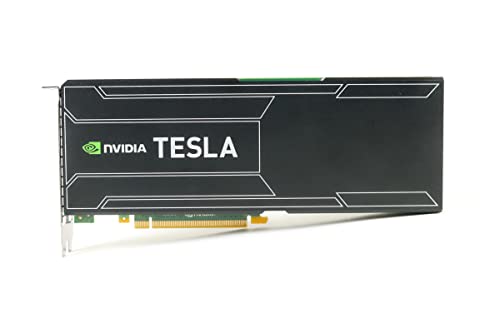
NVIDIA 5GB nVIDIA Tesla K20 GPU Server Accelerator 900-22081-0010-000 (Renewed)
- Package Dimensions: 14.7L x 8.8W x 3.4H inches
- Package Weight: 2.4 pounds
- Package Quantity: 1
As an affiliate, we earn on qualifying purchases.
As an affiliate, we earn on qualifying purchases.
Hardware Records Remain Missing
It is not yet clear which accelerators Huawei used, how many were deployed, or whether the training run was completed as described. There is no disclosed cluster inventory, system log, supplier record or third-party verification connecting the claimed model to a specific computing system.
The reported supply-chain conflict is also undefined. It could concern processor fabrication, memory, packaging, networking, software, earlier equipment or another dependency. Without the underlying records, readers cannot determine whether Nvidia components were entirely absent, used indirectly, or excluded only from a narrowly defined stage. The 505-billion-parameter figure remains unverified as well.

High Performance Computing: Modern Systems and Practices
As an affiliate, we earn on qualifying purchases.
As an affiliate, we earn on qualifying purchases.
Disclosures Could Test the Claim
The next meaningful development would be publication of a technical model report naming the architecture, total and active parameter counts, training data, computing budget and evaluation results. A disclosed hardware inventory would also need to identify accelerators, memory, networking and the scope of the Nvidia-free description.
Supplier documentation or an independent audit could clarify the supply-chain qualification. Until such evidence appears, the report is best treated as an unsubstantiated account rather than confirmation of a 505-billion-parameter Nvidia-free training run.

AI Systems Performance Engineering: Optimizing Model Training and Inference Workloads with GPUs, CUDA, and PyTorch
As an affiliate, we earn on qualifying purchases.
As an affiliate, we earn on qualifying purchases.
Key Questions
Did Huawei confirm that Pangu Pro has 505 billion parameters?
The available material reports a 505-billion-parameter figure, but it does not include a Huawei technical paper, model card or independent audit establishing that number. The figure should be treated as a reported claim.
Was Pangu Pro definitely trained without Nvidia chips?
That has not been independently established. The report provides no accelerator inventory, training logs or methodology defining the scope of “without Nvidia”.
What does the supply-chain qualification mean?
The available wording does not say. It may involve fabrication, memory, packaging, networking or software, but no component, supplier or record is identified. Any more specific explanation would be speculation.
Why does total versus active parameter count matter?
A mixture-of-experts model may contain hundreds of billions of total parameters while activating only a fraction for each task. That distinction changes estimates of the computing and memory demands behind training and use.
What evidence would verify the report?
Useful evidence would include a technical report and model architecture, total and active parameter counts, training records, a cluster inventory and benchmark results. Supplier documents or a credible independent audit would help establish the hardware’s provenance.
Source: Thorsten Meyer AI