TL;DR
Ukraine’s Delta system has become a leading wartime example of software-defined warfare, fusing drones, satellite imagery, sensors and vetted reports into a shared battlefield map. The system’s reach rests on a cloud backend, ordinary browser-based devices and fast iteration, but its dependence on connectivity, cybersecurity and data quality remains a live risk.
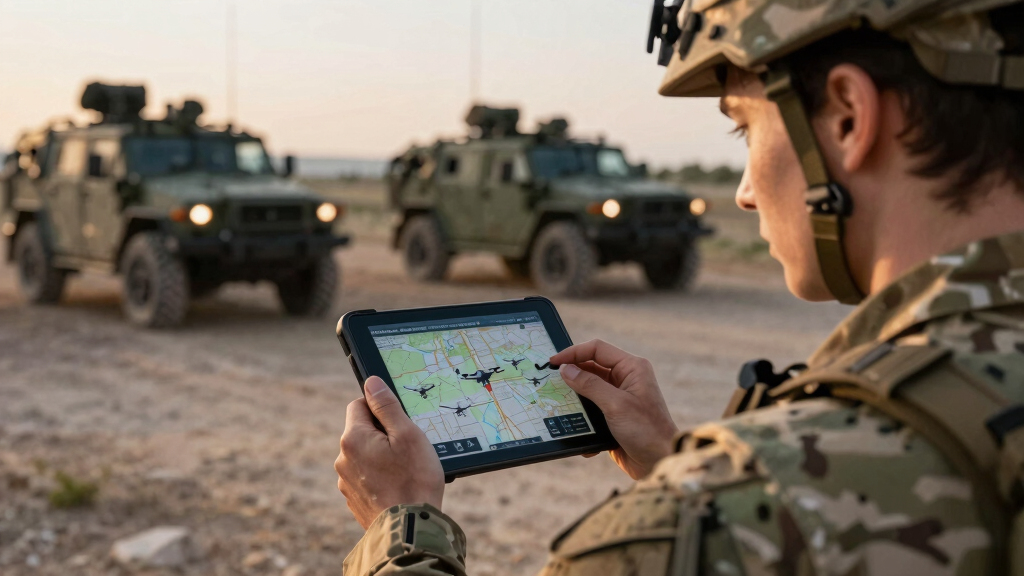
Ukraine’s Delta battlefield system is being cited as a leading example of software-defined warfare after a July 1 ISR Briefing described how it fuses drones, satellite imagery, sensors and vetted field reports into a live common operating picture that soldiers can view through an ordinary browser.
Delta is a situational-awareness and battlefield-management platform built through an unusual Ukrainian coalition involving Aerorozvidka, Ukraine’s Defense Ministry and the Ministry of Digital Transformation. According to the briefing, it combines inputs from reconnaissance units, civilian officials, allied intelligence, drone operators, sensor networks and vetted observers, then places that information on a geolocated map with imagery tied to reported enemy positions.
The system is reported to support more than viewing data. The briefing says Delta is used for planning operations, coordinating units and securely sharing the location of enemy forces. Its most consequential technical choice may be that the backend is cloud-native and deliberately hosted outside Ukraine, while the client can run on regular phones, tablets, laptops and PCs.
That design marks a break from many legacy military systems, which often rely on bespoke hardware, slow procurement cycles and siloed information flows. The source material says Delta’s web-based model helped Ukraine push a shared battlefield picture closer to frontline users at a pace associated more with software teams than traditional defense acquisition. The claim that Delta has helped identify 1,500 targets per day is attributed to Ukraine’s Defense Ministry and has not been independently verified in the supplied material.
Software-defined warfare: how Ukraine’s Delta turned the battlefield into a shared, real-time map
A soldier opens a browser and sees the fused war — drones, satellites, sensors and vetted reports on one live map. The backend is a cloud deliberately hosted abroad so a missile can’t take it down. The clearest case yet of treating warfare as software.
Optical sensors go blind in cloud & dark; an all-weather SAR radar layer — the kind VigilSAR produces — slots into a picture like this as one resilient, sovereign input. vigilsar.com · And note the paradox: to survive missiles & cyberattack, Ukraine hosted its crown-jewel cloud outside its own borders — trading physical sovereignty for operational survivability. Resilience through distribution.
Delta’s lasting lesson isn’t a piece of software — it’s a model of how to build: commodity clients, cloud backend, open standards, relentless iteration, fusion over hardware, and resilience through distribution. It’s why a wartime NGO out-shipped procurement bureaucracies on a fraction of the budget. The platform mattered less than the picture — and the picture is software. Own the fusion layer, own the sovereign feeds into it, and get it to the edge.
Software Moves Combat Advantage
The Delta case matters because it shifts attention from individual platforms to the fusion layer that connects them. Drones, radar, satellites and human reports are valuable on their own, but the briefing argues that the scarce resource is the ability to turn many feeds into one trusted picture and send it quickly to the edge of the battlefield.
For militaries watching Ukraine, the lesson is not only about one Ukrainian application. It is about whether forces can treat command-and-control as software that changes quickly, rather than as a fixed hardware program. A force that can add new sensors, update workflows and share data across units may shorten the time between detection, decision and action.
The model also carries strategic weight for smaller or less wealthy militaries. Delta suggests that commodity devices, open standards and cloud infrastructure can let a force move faster than traditional procurement systems allow. That does not remove the need for secure networks, training or disciplined data handling, but it changes what military modernization can look like under wartime pressure.

HOVERAir X1 Drone with Camera, Follow-me Drone with Self-Flying Mode
Intelligent Follow-Me Camera: Harnessing advanced tracking algorithms and a following speed of up to 15 mph, the HOVERAir…
As an affiliate, we earn on qualifying purchases.
As an affiliate, we earn on qualifying purchases.
Delta’s Wartime Development Path
The briefing traces Delta’s roots to a 2017 NATO-linked effort aimed at breaking Soviet-style information silos and improving interoperability. It later developed through Ukraine’s wartime technology ecosystem, including volunteer technologists, defense innovators and digital-government officials working under extreme pressure after Russia’s full-scale invasion.
A 2024 analysis by CSIS, cited in the source material, used the phrase software-defined warfare to describe the shift represented by systems such as Delta. The idea is that battlefield advantage increasingly depends on data architecture, update speed, interoperability and the ability to incorporate new feeds, rather than only on aircraft, tanks or missiles as standalone assets.
The briefing also points to a sovereignty paradox. By hosting parts of the system outside Ukraine, the operators reduce the chance that a missile strike or domestic infrastructure attack could disable the platform. At the same time, that choice means a key wartime cloud capability depends on infrastructure beyond Ukraine’s physical territory.
“The scarce resource was never the sensor — it’s the fusion layer that turns many feeds into one trustworthy picture and pushes it to the edge.”
— Thorsten Meyer AI ISR Briefing, July 1, 2026
satellite imagery viewer software
As an affiliate, we earn on qualifying purchases.
As an affiliate, we earn on qualifying purchases.
Risks Around Data And Access
Several parts of Delta’s reported performance remain unclear from the supplied material. The 1,500-targets-per-day figure is presented as a Ukrainian Defense Ministry claim, not an independently confirmed metric. The briefing also does not provide a full public account of how Delta validates every input before it reaches frontline users.
The system’s strengths create hazards. A shared, high-value battlefield platform is an attractive cyber target; the source material cites phishing and malware activity reported in December 2022. Delta also depends on connectivity, which can be degraded by jamming, outages or disrupted field networks.
There is also a data-integrity problem. The briefing says crowdsourced and multi-source inputs can invite data poisoning if false information is inserted into the system. It is not clear from the supplied material how often such attempts occur, how many are stopped, or how Delta’s vetting process performs under battlefield pressure.

ERICKHILL EMF Meter,3-in-1Rechargeable Digital Electromagnetic Field Radiation Detector for EF RF MF,5G Cell Tower, WiFi Signal Detector, for Home&Office EMF Inspections, and Ghost Hunting
PRECISE MEASUREMENT:ERICKHILL EMF Meter is an electric field (EF), magnetic field (MF), and RF 3-in-1 multifunctional meter. It…
As an affiliate, we earn on qualifying purchases.
As an affiliate, we earn on qualifying purchases.
NATO Lessons And Future Sensors
The next test is whether Ukraine and its partners can keep Delta resilient as Russia adapts. That means hardening against cyber intrusion, protecting access credentials, preserving connectivity under jamming and improving confidence in the data that reaches commanders and troops.
The briefing also points to future sensor integration. Optical systems can be limited by darkness and weather, while SAR radar and other all-weather feeds could add more resilient inputs to the same battlefield picture. The broader question for Ukraine’s allies is whether their own forces can adopt a similar pattern: cloud backend, ordinary clients, shared standards and rapid updates without losing security or command discipline.
For now, Delta’s wider impact is still being measured. What is confirmed is that Ukraine has fielded a browser-based common operating picture under wartime conditions. What remains under review is how scalable, secure and transferable that model will be for other militaries.
Houele Tablet Stand Holder, Adjustable Foldable Tablet Arm iPad Desk Mount with 360°Rotate Base, Phone Holder iPad Stand for Desk and Bed, Compatible with Tablets, Phones or Other 4-15.6" Device
Versatile Compatibility: This tablet stand for desk comes with retractable clip, perfectly compatible with iPad Pro 13/12.9/11/10.5/9.7, iPad…
As an affiliate, we earn on qualifying purchases.
As an affiliate, we earn on qualifying purchases.
Key Questions
What is Ukraine’s Delta system?
Delta is a Ukrainian situational-awareness and battlefield-management system that fuses drones, satellites, sensors, field reports and partner intelligence into a live map used for planning, coordination and sharing enemy positions.
Why is Delta called software-defined warfare?
The phrase refers to a shift in which battlefield advantage comes from data fusion, software updates, interoperability and speed, not only from standalone military platforms. Delta is cited as an example because it runs through a cloud backend and browser-based clients.
Is the 1,500-targets-per-day figure confirmed?
No. The supplied material attributes the 1,500 targets per day figure to Ukraine’s Defense Ministry and says it is not independently verified.
Why host Delta outside Ukraine?
According to the briefing, hosting the backend abroad can make the system harder to disable through missile strikes or attacks on domestic infrastructure. That choice also creates dependence on infrastructure outside Ukraine’s territory.
What are the main risks for Delta?
The reported risks include cyberattacks, phishing, malware, disrupted connectivity, jamming and possible false data entering the system. The supplied material says these risks remain part of the system’s operational challenge.
Source: Thorsten Meyer AI