
TL;DR
Anthropic’s Claude Code team published guidance on agentic loops on June 30, 2026, defining a loop as repeated agent work until a stop condition is met. Thorsten Meyer AI frames the guidance as a four-rung delegation ladder, showing how teams can hand off checking, stopping, triggering and prompting while managing quality and cost.
Anthropic’s Claude Code team has published new guidance defining agentic AI loops as repeated cycles of work that continue until a stop condition is met, giving developers and businesses a clearer way to decide how much work to delegate to AI systems.
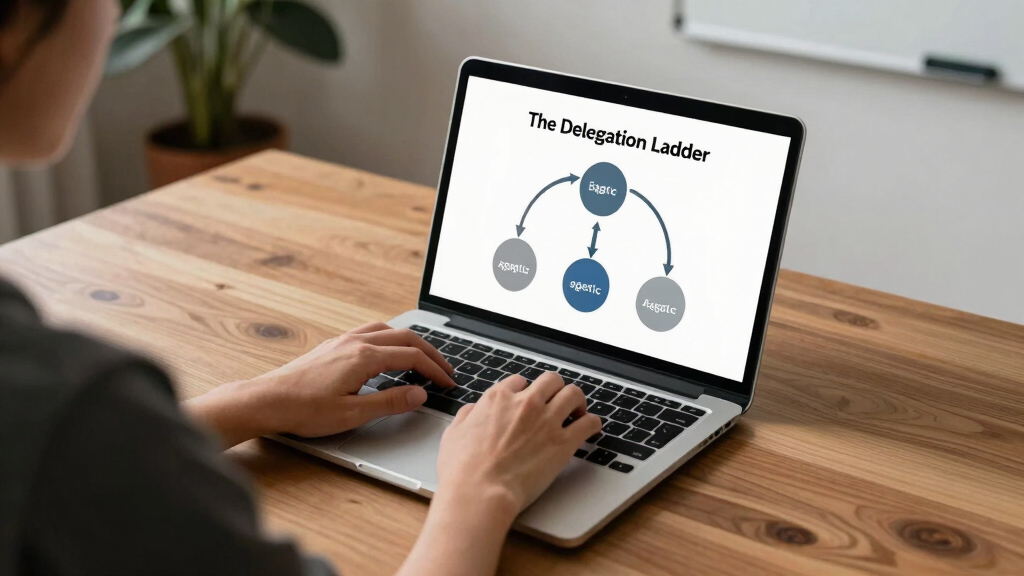
The guidance, cited by Thorsten Meyer AI, identifies four loop patterns: turn-based, goal-based, time-based and proactive workflows. The analysis frames those patterns as a delegation ladder: users first hand off verification, then completion criteria, then the trigger for work, and finally the prompt itself.
In the first rung, a user still starts each task, but the agent can check its own output through a Skill. In the second, a goal command lets an evaluator model keep the agent working until a defined target is met or a turn limit is reached. In the third, scheduled loops let work begin on a timer. In the fourth, proactive workflows start from events or schedules and can coordinate multiple agents without a person prompting in real time.
The report stresses that the framework is not a call to automate every task. Anthropic’s guidance, as summarized by Thorsten Meyer AI, says teams should start with the simplest working method and move up only when the task justifies added autonomy, cost and control requirements.
The delegation ladder: four agentic loops, and what each lets you stop doing
Strip the hype and a “loop” is simple — an agent repeating work until a stop condition is met. The useful lens isn’t the mechanics, it’s what you hand off. Four loop types = four rungs of delegation, from a tool you operate to a process that runs.
The whole framework reduces to one question about your own work: where am I the bottleneck, and which single piece can I hand off? Can you write the check? Is the goal concrete? Does the work arrive on a schedule? That answer picks your rung — and you climb one step at a time. The real skill isn’t operating a loop; it’s the judgment of what to delegate and how far — enough hands off to gain leverage, enough on the wheel that “runs without you” doesn’t become “runs away from you.”
A Map for AI Delegation
The framework matters because it turns a vague AI engineering phrase, designing loops, into a practical question: what part of the work is the human still doing? That makes the discussion relevant beyond developers, especially for teams trying to use AI as a repeatable process rather than a one-off assistant.
For businesses, the main impact is operational. A team can decide whether it is ready to hand off quality checks, completion decisions, scheduled execution or event-driven work. Each step can save human attention, but it also increases the need for stronger tests, clearer limits and cost monitoring.
For technical teams, the article’s main warning is that autonomy is metered. Anthropic’s examples, according to the source material, point to specific stop criteria, cheap capable models, usage monitoring and pilot runs before launching large agent runs.

AI Workflow Automation for Bloggers: Build a Simple Content System to Research, Write, Optimize, and Repurpose Posts Faster with AI and No-Code Tools (AI Toolkit for Bloggers 2026 Book 8)
As an affiliate, we earn on qualifying purchases.
As an affiliate, we earn on qualifying purchases.
From Prompts to Processes
The analysis follows Anthropic’s June 30 Claude blog post, “Getting started with loops,” by Delba de Oliveira and Michael Segner. Thorsten Meyer AI says the loop definitions, primitives and examples come from Anthropic, while the delegation ladder framing is its own interpretation.
The timing fits a broader shift in AI software development from isolated prompts toward agentic systems that repeat actions, check results and manage work over multiple steps. The source material says some listed features are research previews, meaning their availability and behavior may vary by product and setup.
“A loop is an agent repeating cycles of work until a stop condition is met.”
— Anthropic’s Claude Code team, as cited by Thorsten Meyer AI

The Agentic AI Team: Who Owns What When the Software Acts on Its Own (Agentic AI for Product Leaders)
As an affiliate, we earn on qualifying purchases.
As an affiliate, we earn on qualifying purchases.
Limits Still Need Testing
Several details remain unsettled. It is not yet clear how consistently teams will apply goal-based evaluators, how reliable proactive workflows will be across varied production environments, or how much cost will rise when many agents run at once.
The source material also says some features are research previews. That means readers should treat implementation details, product availability and large-scale behavior as developing unless confirmed in current Anthropic documentation.

Time Management With AI: Work Smarter, Save 10+ Hours a Week, Boost Productivity with Smart Automation Tools, and Live a Life That Matters
As an affiliate, we earn on qualifying purchases.
As an affiliate, we earn on qualifying purchases.
Teams Will Pilot Rungs
The next step for developers and operators is likely controlled testing: encode self-verification in skills, set measurable goals, cap repeated attempts and watch usage before moving to scheduled or event-driven workflows.
Anthropic’s documentation at code.claude.com/docs is the next reference point for implementation details. For readers, the practical question is which single bottleneck can be handed off first without losing visibility into quality, cost and completion.

Building Agentic AI Systems: Create intelligent, autonomous AI agents that can reason, plan, and adapt
As an affiliate, we earn on qualifying purchases.
As an affiliate, we earn on qualifying purchases.
Key Questions
What is the news development?
Anthropic’s Claude Code team published guidance on agentic loops, and Thorsten Meyer AI analyzed it as a four-rung delegation ladder for deciding how much work AI agents should handle.
What are the four loop types?
The four types are turn-based loops, goal-based loops, time-based loops and proactive workflows. Each one hands off a different part of the work, from checking output to starting work without a live prompt.
What is confirmed and what is interpretation?
The definitions and examples are attributed to Anthropic. The delegation ladder framing is Thorsten Meyer AI’s interpretation of what those loop types mean for developers and businesses.
Why should businesses care?
The framework gives teams a way to decide whether AI should handle verification, completion checks, scheduled work or event-driven tasks. That affects staffing, review processes, software quality and usage costs.
What should teams be cautious about?
Teams should avoid applying loops to every task. The source material points to clear stop criteria, turn caps, pilot runs and usage monitoring as safeguards before expanding agent autonomy.
Source: Thorsten Meyer AI