
TL;DR
Recent investigations reveal Rudolf Höss’s family lived in a luxurious villa adjacent to Auschwitz, enjoying a life of comfort while atrocities occurred nearby. The story underscores the moral divide within the camp’s leadership family.
New evidence confirms that Rudolf Höss’s family lived in a villa directly adjacent to Auschwitz, enjoying a life of luxury while the camp was responsible for the deaths of hundreds of thousands of prisoners, including children. This stark contrast between the family’s privileged life and the horrors of the camp highlights a disturbing moral divide.
Investigations and testimonies reveal that Rudolf Höss, the longest-serving commandant of Auschwitz, had his family residence just steps from the camp’s prisoner blocks and crematorium. The villa’s garden gate opened directly into the camp, with views of the camp’s facilities from upstairs windows. The family decorated their home with artifacts taken from prisoners, including furniture and art, indicating a life of comfort amid ongoing atrocities.
Höss’s daughter, Brigitte, has publicly doubted the scale of the Holocaust’s death toll, although she acknowledged that atrocities occurred. In 1972, she moved to Washington, where she worked in a fashion salon owned by a Jewish family who fled Nazi Germany. Rudolf Höss’s grandson, Rainer, has publicly denounced his grandfather, stating he would have killed him if given the chance. Rainer has participated in documentaries exposing his grandfather’s crimes.
Why It Matters
This revelation underscores the moral and psychological complexities within Nazi leadership families, illustrating how some members maintained lives of privilege while atrocities unfolded nearby. It raises questions about complicity, denial, and moral responsibility among those connected to the Holocaust’s architects.
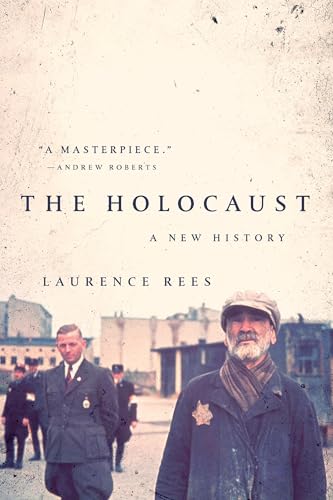
The Holocaust: A New History
As an affiliate, we earn on qualifying purchases.
As an affiliate, we earn on qualifying purchases.
Background
Rudolf Höss was the commandant of Auschwitz from 1940 to 1943 and again in 1944-1945. His family’s residence was located at the edge of the camp, making their proximity to the atrocities undeniable. Previous investigations have focused on Höss’s role in the Holocaust, but recent interviews and documents shed light on the personal lives of his family, revealing a parallel universe of luxury amid horror.
“I would have killed him myself.”
— Rainer Höss, grandson
“I do not deny that atrocities took place, but I doubt that millions were killed.”
— Brigitte Höss, Rudolf’s daughter

Auschwitz Birkenau State Museum, Poland Fridge Magnet Size 2.5" x 3.5" (p4281)
Eye-catching Imagery: This fridge magnet showcases stunning photography of penguins in their natural Antarctic habitat.
As an affiliate, we earn on qualifying purchases.
As an affiliate, we earn on qualifying purchases.
What Remains Unclear
It remains unclear how aware Rudolf Höss’s family was of the full extent of the atrocities committed at Auschwitz. Details about their personal involvement or knowledge are still being investigated, and some family members have provided conflicting accounts of their awareness and moral stance.

Auschwitz – Inside the Nazi State
Factory sealed DVD
As an affiliate, we earn on qualifying purchases.
As an affiliate, we earn on qualifying purchases.
What’s Next
Further research into the family’s archives and interviews with surviving relatives are expected to clarify the extent of their knowledge and involvement. Authorities and historians may also explore the broader implications of such dual lives among Nazi officials’ families.

Hobbyboss 83814" German Le.Pz.Sp.Wg Sd.Kfz.221 Leichter Panzerspahwagen-Late Plastic Model Kit, 1:35 Scale
1/35 scale
As an affiliate, we earn on qualifying purchases.
As an affiliate, we earn on qualifying purchases.
Key Questions
How close was Rudolf Höss’s family residence to Auschwitz?
The family villa was directly adjacent to the camp, with the garden gate opening into the camp itself, providing a clear view of the prisoner blocks and crematorium from upstairs windows.
Did Rudolf Höss’s family know about the mass killings?
It is not yet confirmed how much they knew. Some family members have denied full awareness, while others suggest they may have been aware but chose to ignore or deny the extent of the atrocities.
What is Rudolf Höss’s grandson doing now?
Rainer Höss has publicly denounced his grandfather and participated in documentaries exposing his crimes. He has expressed strong moral opposition to his grandfather’s actions.
Why is this discovery significant?
This case highlights the moral complexities and psychological divides within Nazi leadership families, illustrating how some maintained lives of privilege amid ongoing genocide, which raises questions about complicity and denial.
Are there other families with similar stories?
Research is ongoing, but this case is among the few publicly documented instances of Nazi officials living in close proximity to their camps with such starkly contrasting lifestyles.
Source: History of Sorts – WORLD WAR II, MUSIC, HISTORY, HOLOCAUST