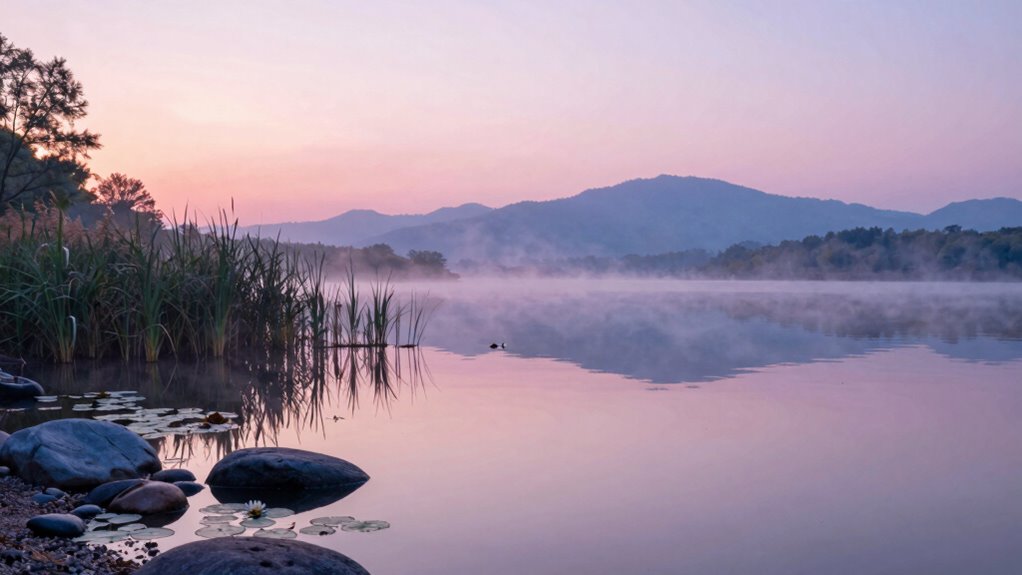

To match your environment to the calm you need, start by adjusting lighting to match your mood—dim for relaxation or bright for energy. Control noise levels using soundproofing or noise-canceling headphones, and add natural elements like plants or fresh air to promote tranquility. Incorporate calming scents or soft textiles for focused calm, or lively greenery and uplifting sounds to boost energy. Keep exploring for more tips on creating a space that supports your mental well-being.
Key Takeaways
- Identify your current emotional state and choose environment adjustments that promote relaxation, focus, or energy accordingly.
- Use natural elements like plants, daylight, and earthy textures to create a calming or revitalizing atmosphere.
- Minimize noise and clutter for focused calm, or introduce gentle sounds and lively visuals to boost energy.
- Adjust lighting and scents to match your mood, such as dim lights for relaxation or bright lighting for alertness.
- Design your space intentionally, aligning environment features with your specific mental and emotional needs.

Have you ever noticed how your surroundings can influence your mood? The environment around you plays a significant role in shaping how calm or stressed you feel. If you’re aiming for a peaceful state of mind, adjusting your space can make a noticeable difference. One of the most effective ways to do this is by focusing on noise reduction. Excess noise, whether from traffic, conversations, or electronic devices, can keep your mind on edge and hinder relaxation. To create a calmer atmosphere, consider adding soundproofing elements or using noise-canceling headphones during your quiet moments. Soft background sounds, like gentle music or nature sounds, can also drown out disruptive noise and help you settle into a more tranquil state.
Reducing noise with soundproofing or calming sounds fosters a tranquil, peaceful environment.
Equally important are natural elements, which have a profound calming effect. Incorporating plants, natural light, and earthy textures into your environment can instantly boost your sense of serenity. Plants not only improve air quality but also serve as a visual reminder of the natural world, grounding your thoughts and reducing stress. Open windows to let in fresh air and sunlight, which can elevate your mood and create a sense of openness. When you surround yourself with natural elements, you foster a connection to the outdoors, helping your mind relax and feel more centered. Additionally, understanding how biodiversity influences our environment can deepen your appreciation for these calming natural features. Engaging with diverse natural elements has been shown to enhance mental well-being, making your space even more soothing. Recognizing the importance of natural elements in creating a calming space can guide you in designing environments that promote tranquility. Incorporating a variety of textures and colors inspired by nature can further enhance this effect. To deepen your understanding, exploring the role of ecological diversity can reveal how a balanced natural environment supports overall well-being.
Matching your environment to the type of calm you need isn’t just about adding elements; it’s about intentionally designing your space to support your mental state. If you seek focused calm for work or meditation, prioritize a clutter-free area with minimal noise and natural light. For unwinding after a long day, you might enhance your space with soft textiles, calming scents, and gentle sounds. Remember, the design of your environment plays a crucial role in fostering the right mood. The goal is to create an environment that aligns with your desired calm, whether it’s quiet concentration or peaceful relaxation.
You can also tailor your environment to fluctuate with your mood. For moments when you need to decompress, dim the lights, minimize noise, and bring in soothing natural elements. If you’re craving a bit of energy, open the blinds, add lively plants, or play uplifting sounds. By consciously matching your surroundings to your emotional needs, you empower yourself to access calm more easily and make your space a true sanctuary. This intentional approach ensures that your environment supports your well-being, helping you stay centered regardless of what life throws your way.

Soundcore by Anker Q20i Hybrid Active Noise Cancelling Headphones, Black
- Hybrid Noise Cancelling: Reduces up to 90% external noise
- Detailed Audio Quality: 40mm drivers with BassUp technology
- Long Battery Life: 40 hours with ANC, 60 hours normal mode
As an affiliate, we earn on qualifying purchases.
As an affiliate, we earn on qualifying purchases.
Frequently Asked Questions
How Quickly Can Environment Changes Influence My Calmness?
Environmental changes can influence your calmness almost instantly, especially when you apply stress adaptation techniques. According to environmental psychology, shifting your surroundings—like reducing noise or adding calming elements—can quickly lower stress levels. You might notice a sense of calm within minutes if you intentionally create a peaceful environment. Your brain responds rapidly to environmental cues, so small adjustments can have a powerful impact on your emotional state in a short time.
Are There Specific Colors That Promote Relaxation in Any Setting?
You’ll find that blue and green are proven to promote relaxation through color psychology, often used in healthcare settings to reduce stress. These calming colors evoke serenity and stability. Incorporate mood lighting with soft, warm hues and natural tones to enhance relaxation further. Studies show that environments with these colors can lower heart rates and decrease anxiety, creating a peaceful space where you can truly unwind and feel at ease.
Can Soundscapes Alone Create a Sense of Calm?
Yes, soundscapes alone can create a sense of calm. Nature sounds and ambient noise help you relax by mimicking peaceful environments, reducing stress, and blocking out distractions. When you listen to gentle streams, birdsong, or soft wind, your mind naturally eases into a tranquil state. Incorporating these soundscapes into your space can effectively promote calmness, making you feel more centered and at peace in minutes.
How Do I Adapt My Environment for Different Types of Stress?
To adapt your environment for different types of stress, start by adjusting your personal space—create a dedicated, clutter-free zone that feels safe. Use lighting ambiance to influence your mood; softer, warmer lights help reduce anxiety, while brighter lights can boost alertness. Incorporate calming sounds or scents if needed. These changes help you regain calm quickly, making your environment a tailored refuge for any stress level.
What Indoor Plants Are Best for Reducing Anxiety?
You should choose succulents like aloe vera or jade plants, which are easy to care for and help create a calming atmosphere. Low light plants such as snake plants or pothos also work well, thriving in dim environments and reducing anxiety. These indoor plants promote tranquility, improve air quality, and help you feel more relaxed. Incorporate them into your space to foster a soothing environment that eases your mind.
As an affiliate, we earn on qualifying purchases.
Conclusion
Remember, the environment you choose shapes your state of calm. By tailoring your surroundings to foster peace—whether that’s quiet, nature, or simplicity—you create a sanctuary for your mind. Don’t forget, “A calm sea does not make a skilled sailor.” Embrace this wisdom by intentionally crafting your space to support your well-being. When your environment aligns with your need for calm, you’ll find it easier to stay centered and resilient through life’s ups and downs.
adjustable mood lighting for home
As an affiliate, we earn on qualifying purchases.
As an affiliate, we earn on qualifying purchases.
natural scent diffusers for calming
As an affiliate, we earn on qualifying purchases.
As an affiliate, we earn on qualifying purchases.