

When someone says you’re too sensitive, they’re usually trying to control how you respond emotionally, not truly addressing your feelings. This phrase shifts the focus from your genuine experience to making you question yourself or feel guilty. It’s a way for others to assert power and dismiss your concerns, weakening your confidence. Recognizing this tactic helps protect your self-esteem and set boundaries. If you want to understand more about how this manipulative pattern works, keep exploring these insights.

Turn your wind-down time into listening time
- Thousands of audiobooks, podcasts and originals
- Listen on your phone, tablet or Echo — also offline
- Cancel anytime
Key Takeaways
- The phrase aims to dismiss and invalidate emotional responses, shifting focus from genuine feelings to control.
- It serves as a manipulation tactic to undermine confidence and limit emotional expression.
- Labeling someone as “too sensitive” often masks an attempt to assert dominance and control the conversation.
- Recognizing this phrase helps differentiate between genuine concern and emotional manipulation.
- Setting boundaries and understanding power dynamics protect against being controlled through invalidation.
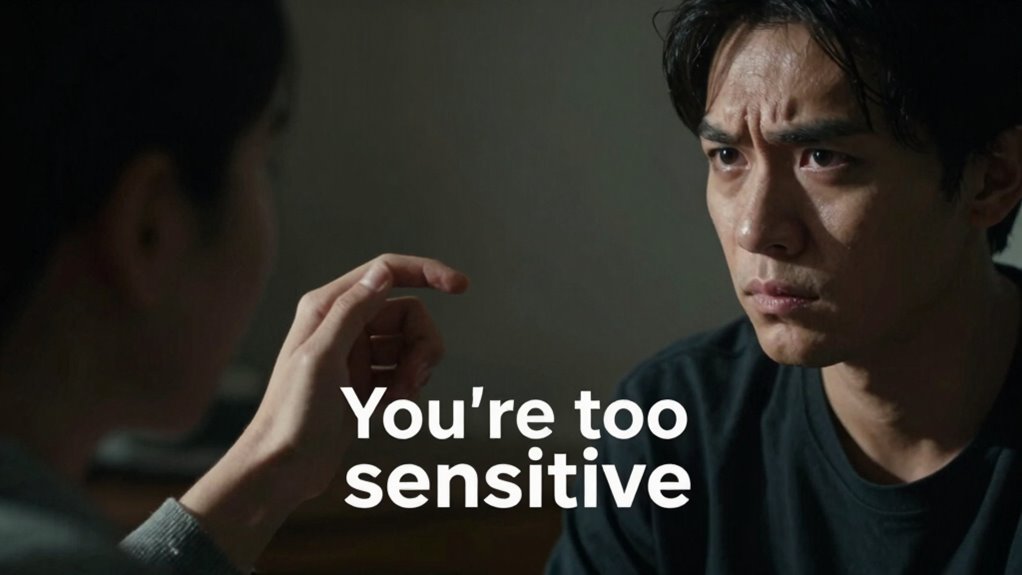
When someone tells you, “You’re too sensitive,” they’re often trying to control your reactions rather than genuinely address your feelings. This phrase is frequently used as a tool in emotional manipulation, designed to undermine your confidence and dismiss your emotions. Instead of fostering understanding, it shifts the focus from your experience to making you feel guilty or overly reactive, which makes you question your own feelings. The real intention behind this comment often ties into power dynamics—those subtle ways people attempt to assert dominance or control over your emotional responses. By labeling you as “too sensitive,” they aim to diminish your stance, making it easier for them to dismiss your concerns or limit your voice.
In many cases, this phrase is a form of emotional manipulation that seeks to weaken your sense of self and keep you from challenging the status quo. When someone uses it, they’re not truly concerned about your sensitivity but are instead trying to silence or invalidate your feelings. It shifts the power balance, subtly making you feel as if your reactions are unreasonable or overblown. Over time, this can lead you to question your own perceptions, causing you to doubt your emotional authenticity. Recognizing emotional manipulation is vital because it exposes the underlying motive: control. This awareness can help you differentiate between genuine concern and tactics meant to diminish your voice. When you understand that “You’re too sensitive” is less about your actual emotions and more about maintaining power, you can begin to protect yourself. It’s important to stand firm in your feelings and remember that your reactions are valid. No one has the right to invalidate your emotional experiences or make you feel small because of them. Developing emotional resilience and understanding power dynamics can further strengthen your ability to respond confidently and maintain your self-esteem in these situations. Recognizing these tactics allows you to set healthier boundaries and assert your emotional needs more effectively. Additionally, cultivating self-awareness about these power plays can help you resist their influence and uphold your emotional independence.
As an affiliate, we earn on qualifying purchases.
Frequently Asked Questions
How Can I Tell if My Sensitivity Is Being Unfairly Dismissed?
You can tell if your sensitivity is unfairly dismissed by observing if others dismiss your feelings without understanding or validate your emotional resilience. If they label your vulnerability as overreacting or try to control your reactions, that’s a sign. Genuine acceptance involves respecting your emotional expression and supporting your vulnerability, not dismissing it. Trust your feelings, and seek environments that promote vulnerability acceptance and recognize your emotional strength.
What Are Healthy Ways to Express My Feelings When Called “Too Sensitive”?
When called “too sensitive,” you can express your feelings healthily by calmly sharing how the comment affects you. Use “I” statements to communicate your emotions clearly. Focus on building resilience by recognizing your feelings as valid and practicing self-compassion. This approach helps you assert your boundaries without aggression, fostering understanding and emotional growth. Remember, expressing feelings openly supports your mental well-being and encourages respectful conversations.
How Does Control Manifest in Emotional Manipulation?
Control in emotional manipulation is like a puppeteer pulling strings behind the scenes. It manifests through emotional tactics that make you doubt yourself, like guilt-tripping or gaslighting. Power dynamics come into play when someone uses your feelings to dominate or silence you. They aim to shift responsibility, making you feel responsible for their emotions, which keeps you feeling powerless and dependent on their approval.
Can Being Sensitive Be a Sign of Emotional Strength?
Yes, being sensitive can be a sign of emotional strength. It shows you’re capable of empathy development, understanding others’ feelings deeply. Sensitivity allows you to connect on a genuine level, fostering emotional resilience when facing challenges. Instead of viewing sensitivity as a weakness, see it as a way to build stronger relationships and personal growth. Embracing your sensitivity helps you navigate emotions more effectively and grow stronger through life’s experiences.
What Steps Can I Take to Set Boundaries With Controlling People?
Set boundaries like a sturdy fence around your emotional garden. Recognize power dynamics at play and assert your needs confidently. Communicate clearly, saying what you will and won’t accept, and stick to your limits. Practice saying “no” without guilt, and surround yourself with supportive people. By maintaining your emotional boundaries, you reclaim control, ensuring your feelings aren’t trampled by controlling individuals. Your well-being deserves this armor of self-respect.
As an affiliate, we earn on qualifying purchases.
Conclusion
So next time someone dismisses your feelings with “You’re too sensitive,” remember—they’re trying to keep control, not judge your sensitivity. It’s like they’re trying to silence your truth, but your emotions are your strength, not your weakness. Don’t let their words be a cage—your feelings are valid. Stand tall and claim your space. After all, isn’t it time we stop letting others dictate how we feel and start owning our own stories?
As an affiliate, we earn on qualifying purchases.
emotional manipulation protection tools
As an affiliate, we earn on qualifying purchases.
As an affiliate, we earn on qualifying purchases.
Halloween Picks
halloween
As an affiliate, we earn on qualifying purchases.