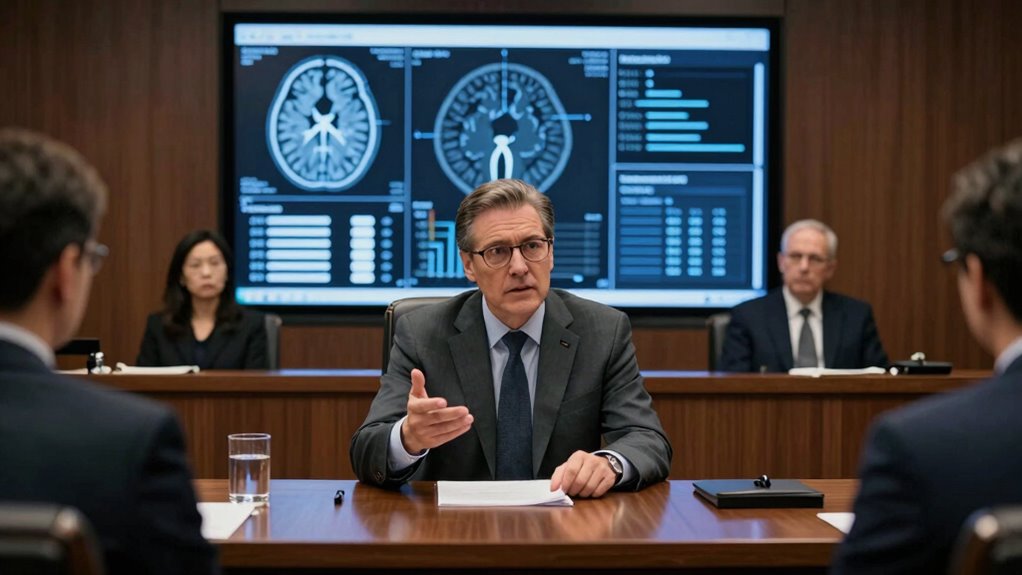

Expert witnesses in forensic psychology explain complex mental health issues, behavioral patterns, and psychological evidence to help courts understand a defendant’s mental state, credibility, and personality traits. They clarify how psychological factors influence behavior and case outcomes, often using assessments, interviews, and visual aids. Their role is to make scientific concepts accessible and objective for judges and juries. Staying informed on these explanations can deepen your insight into how psychology impacts legal decisions.

Turn your wind-down time into listening time
- Thousands of audiobooks, podcasts and originals
- Listen on your phone, tablet or Echo — also offline
- Cancel anytime
Key Takeaways
- Expert witnesses clarify complex psychological concepts to help judges and juries understand mental states and behavioral patterns.
- They evaluate mental health, credibility, and risk factors using standardized assessments and behavioral observations.
- Their explanations include insights into how mental conditions influence behavior and decision-making relevant to the case.
- They communicate findings clearly, often with visual aids, to ensure non-expert audiences grasp psychological evidence.
- Their role supports fair legal decisions by providing objective, scientifically supported insights into psychological factors.
forensic psychology assessment tools
As an affiliate, we earn on qualifying purchases.
As an affiliate, we earn on qualifying purchases.
What Is the Role of Expert Witnesses in Forensic Psychology?
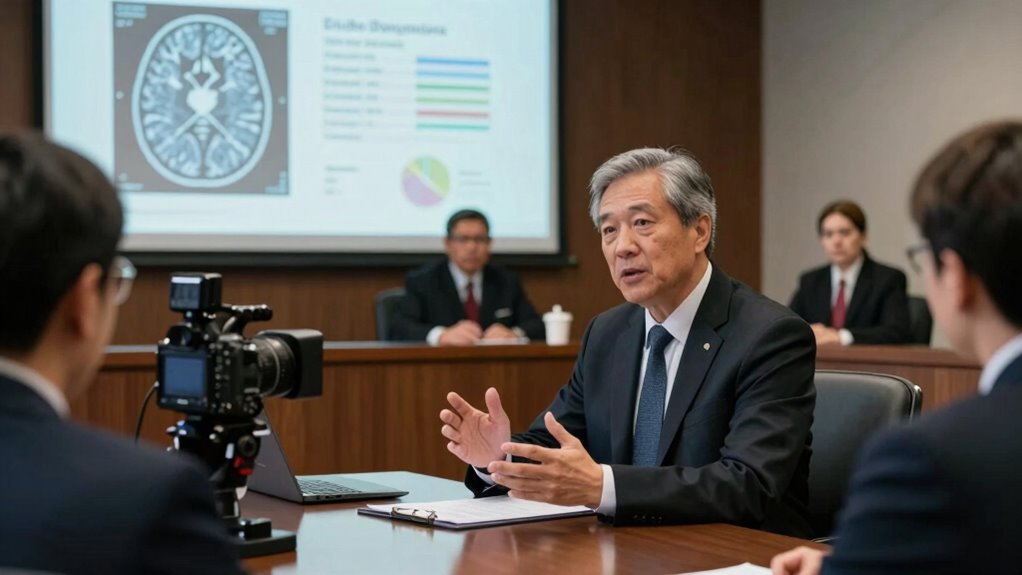
Expert witnesses in forensic psychology play a crucial role in the courtroom by providing specialized insights into a defendant’s mental state, personality, or behavior. Your testimony must meet legal admissibility standards, meaning your evaluations and opinions are based on reliable methods and relevant evidence. You need to guarantee that your assessments are scientifically sound and properly documented to withstand scrutiny. Ethical considerations are equally important, as you must maintain objectivity, confidentiality, and impartiality while avoiding conflicts of interest. Your role isn’t just to present findings but also to clarify complex psychological concepts for judges and juries, helping them understand how mental health factors influence behavior. Balancing legal requirements with ethical responsibilities ensures your contributions are credible and impactful. Additionally, staying current with developments in fields like forensic psychology enhances the accuracy and relevance of your testimony. Engaging in ongoing professional development helps ensure your evaluations reflect the latest research and standards. Moreover, understanding assessment tools and their proper application is vital for producing reliable and legally defensible opinions. Keeping abreast of scientific methods used in evaluations further strengthens the credibility of your testimony.
mental health evaluation kits for forensic experts
As an affiliate, we earn on qualifying purchases.
As an affiliate, we earn on qualifying purchases.
How Do Forensic Psychologists Assess Mental Health and Credibility in Court?

To determine a defendant’s mental health and credibility, forensic psychologists employ a combination of structured assessments, clinical interviews, and behavioral observations. These methods help evaluate jury perceptions and identify malingering, where someone fakes or exaggerates symptoms. By carefully analyzing responses, psychologists can detect inconsistencies or signs of deception, guaranteeing a fair assessment. The table below highlights key assessment factors:
| Method | Purpose | Outcome |
|---|---|---|
| Structured Tests | Measure mental state | Accurate diagnosis |
| Clinical Interviews | Understand personal history | Clarify credibility |
| Behavioral Observations | Spot deception or malingering | Improve jury perceptions |
| Malingering Detection | Identify faked symptoms | Prevent false credibility claims |
| Evidence Analysis | Corroborate findings | Support fair judgments |
This process ensures the court accurately interprets mental health and honesty. Additionally, assessment tools are continually refined to enhance diagnostic accuracy and reliability in forensic evaluations, making the assessment process more scientifically validated.
credibility assessment tests for court
As an affiliate, we earn on qualifying purchases.
As an affiliate, we earn on qualifying purchases.
What Behavioral Patterns and Personality Traits Do Experts Explain During Trials?
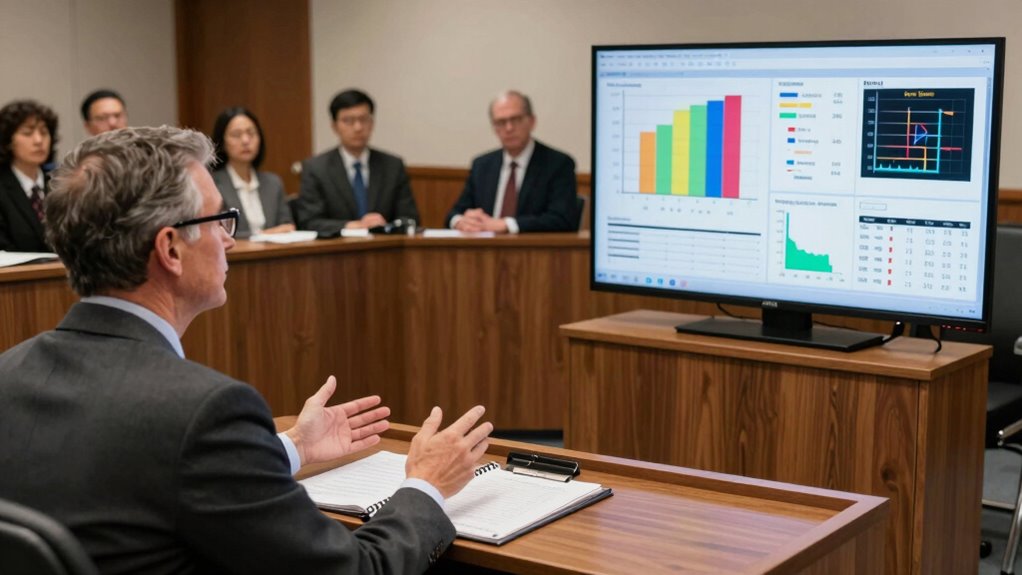
During trials, forensic psychologists analyze behavioral patterns and personality traits to assess a defendant’s mental state and potential risk factors. They look for signs of criminal tendencies, such as impulsivity, aggression, or deception, which can influence case outcomes. Through personality diagnostics, experts identify traits like narcissism, antisocial behavior, or emotional instability that may relate to the defendant’s actions. These insights help the court understand underlying motivations and behavioral predispositions. Psychologists may highlight consistent patterns in a person’s history, such as repeated criminal behavior or difficulty controlling impulses. By explaining these patterns and traits, experts provide the court with a clearer picture of the defendant’s personality profile, aiding in sentencing decisions, competency evaluations, and risk assessments. Additionally, understanding behavioral patterns can assist in evaluating a defendant’s potential for rehabilitation or future risk. Recognizing environmental influences and their impact on behavior can further enrich the court’s understanding of individual cases. For example, the presence of toxic environments has been shown to significantly affect behavioral development and tendencies. Furthermore, the identification of personality traits helps in tailoring intervention strategies and understanding the likelihood of recidivism. Forensic psychologists often utilize methodical testing processes to collect data that supports their evaluations, ensuring accuracy and reliability in their conclusions.
behavioral observation training for psychologists
As an affiliate, we earn on qualifying purchases.
As an affiliate, we earn on qualifying purchases.
How Do Psychologists Clarify the Impact of Psychological Factors on Case Outcomes?
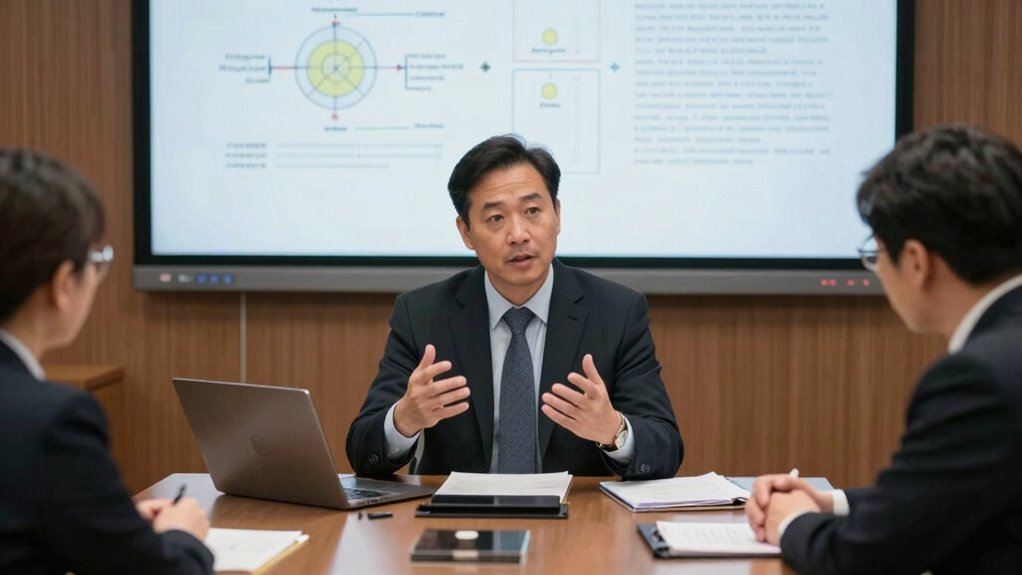
Psychologists clarify the impact of psychological factors on case outcomes by systematically evaluating how mental health issues influence a defendant’s behavior and decision-making. They identify emotional biases that may distort perceptions and recognize cognitive distortions affecting judgment. These assessments can also reveal underlying mental health conditions, which are crucial for understanding the defendant’s overall psychological profile. Accurate psychological evaluation is essential for providing the court with reliable insights into the defendant’s mental state. These factors can sway legal decisions, so psychologists explain their influence clearly. To illustrate, consider this table:
| Psychological Factor | Effect on Behavior | Impact on Case Outcome |
|---|---|---|
| Emotional Bias | Clouded judgment | Biases verdict or sentencing |
| Cognitive Distortions | Faulty reasoning | Misinterpretation of evidence |
| Mental Health Issues | Impaired decision-making | Reduced culpability or increased risk |
Additionally, understanding the role of psychological assessments is crucial for accurately interpreting these factors within the legal context. Moreover, experts often use behavioral analysis to provide comprehensive insights into the defendant’s mental state and its influence on their actions. Recognizing the importance of evidence-based methods ensures that evaluations are objective and scientifically grounded.
What Tests and Techniques Do Forensic Psychologists Use in Court?
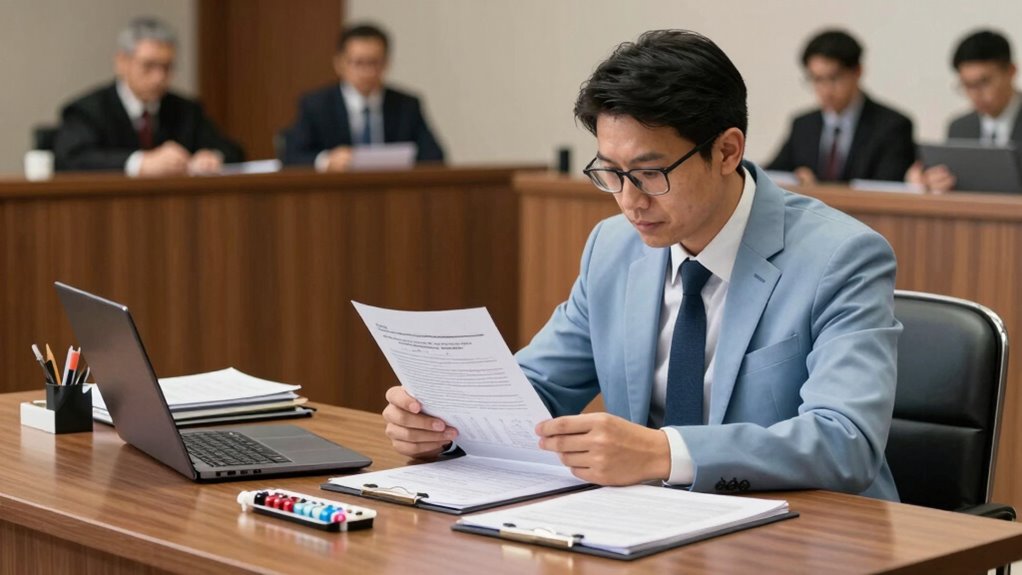
Forensic psychologists rely on a variety of specialized tests and assessment techniques to evaluate mental health, personality, and cognitive functioning in legal contexts. These psychological assessments help determine a person’s competency, mental state at the time of an offense, or risk of future harm. Forensic testing includes structured interviews, projective tests, and standardized questionnaires designed to gather objective data. You might see tools like the MMPI-2 or PCL-R used to assess personality traits and psychopathy. These assessments provide essential insights that inform court decisions, ensuring that evaluations are based on reliable, scientifically supported methods. Detect passive voice By applying forensic testing appropriately, psychologists help clarify complex psychological factors, supporting the legal process with accurate, evidence-based evaluations.
How Is Psychological Evidence Communicated to Judges and Juries?
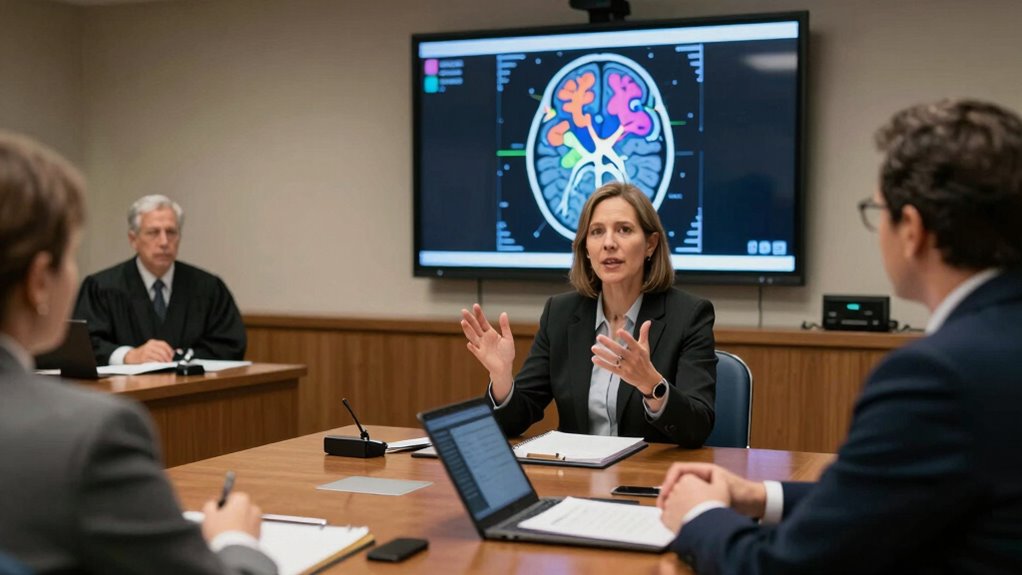
You need to present psychological evidence in a way that judges and juries easily understand. Using clear communication strategies, like simple language and logical explanations, is essential. Visual aids and demonstrations can help make complex concepts more accessible and memorable. Incorporating creative storytelling techniques can also help convey psychological insights more effectively, fostering a stronger emotional connection and aiding comprehension. Additionally, being aware of juror psychology can guide how you tailor your explanations to ensure maximum clarity and impact. Moreover, understanding public perception of psychology can help experts address misconceptions and reinforce credibility during testimony. Being mindful of public misconceptions about psychology allows experts to clarify misunderstandings and build trust with the court.
Clear Communication Strategies
Effective communication of psychological evidence is essential in ensuring that judges and juries understand complex concepts clearly. To achieve this, you should focus on jargon simplification, replacing technical terms with plain language. This helps prevent misunderstandings and keeps your message accessible. Additionally, storytelling techniques can make your explanation more engaging and memorable, allowing the audience to relate to real-life scenarios or case narratives. By framing your testimony as a story, you guide the court through the evidence logically and compellingly. These strategies ensure your message resonates, making complex psychological concepts understandable without diluting their significance. Clear, straightforward communication builds trust and helps the court accurately interpret your expert insights. Incorporating visual aids can further enhance understanding by illustrating key points and reducing cognitive load for the court. Utilizing clarity in language also contributes to effective communication by minimizing ambiguities and enhancing comprehension. Moreover, being mindful of audience perspective ensures that your explanations are tailored to the court’s level of expertise, increasing their effectiveness. To further facilitate understanding, emphasizing conceptual clarity helps clarify intricate psychological ideas for non-expert audiences. Additionally, leveraging digital tools like interactive presentations can provide dynamic ways to convey complex data or concepts more effectively.
Visual Aids and Demonstrations
Visual aids and demonstrations play a crucial role in making complex psychological evidence more understandable for judges and juries. Using visual aids—such as charts, graphs, or diagrams—helps break down intricate data into clear, digestible visuals. Demonstrations, like role-plays or reenactments, engage the audience and illustrate psychological concepts in action. These tools make abstract ideas more concrete, reducing misunderstandings and enhancing retention. When you incorporate visual aids effectively, you help the court grasp subtle psychological nuances that might otherwise be lost in technical language. Demonstrations add an interactive element, making the evidence more relatable. Overall, well-designed visual aids and demonstrations bridge the gap between expert insights and lay understanding, ensuring your testimony has a lasting, impactful impression.
Frequently Asked Questions
How Is Expert Testimony Prepared Before Court Appearances?
You prepare expert testimony by reviewing relevant case details, including jury selection and psychological assessments, to guarantee clarity. You organize your findings, practice explaining complex concepts in simple terms, and anticipate questions from attorneys. You also stay updated on legal standards and precedents. This preparation helps you communicate effectively, build credibility, and support your opinions convincingly during court appearances.
What Ethical Considerations Govern Forensic Psychologists in Court?
Imagine Sherlock Holmes maneuvering a labyrinth of confidentiality dilemmas—this is your reality as a forensic psychologist. You must uphold professional boundaries, ensuring confidentiality while providing honest, impartial testimony. Ethical considerations demand you balance client privacy with court needs, avoiding conflicts of interest. Staying true to your ethical code guides your actions, helping you maintain credibility and integrity while navigating complex legal and moral terrains.
How Do Experts Handle Conflicting Psychological Opinions?
When faced with conflicting opinions, you carefully review all evidence and reasoning behind each expert’s perspective. You acknowledge expert disagreements transparently, explaining the basis for each viewpoint to the court. You emphasize the strengths and limitations of each opinion, helping the judge or jury understand the complexity. By remaining impartial and clear, you guarantee that conflicting opinions are presented fairly, aiding informed decision-making without bias.
What Training Is Required to Become a Forensic Psychology Expert?
You need specialized training in forensic psychology, including a graduate degree like a PhD or PsyD in psychology. You also must obtain legal certification, which involves passing exams and gaining supervised experience. Throughout your work, you follow strict confidentiality protocols to protect client information. This combination of education, certification, and adherence to legal standards prepares you to serve effectively as a forensic psychology expert in court.
How Do Courts Evaluate the Reliability of Psychological Evidence?
You should know courts evaluate psychological evidence by examining its statistical validity and how well it’s supported by research. They also consider whether experts have mitigated bias in their assessments. Judges and juries look for clear, scientifically sound methods, guaranteeing the evidence isn’t skewed or unreliable. If the evidence passes these criteria, it’s more likely to be accepted as credible, helping to ensure fair and accurate proceedings.
Conclusion
Understanding what forensic psychologists explain helps you see their vital role in court. Imagine a defendant claiming amnesia after a traumatic event; the psychologist’s assessment clarifies their mental state, influencing the verdict. By sharing insights into mental health, credibility, and behavioral patterns, these experts guide judges and juries through complex psychological evidence. Their work guarantees cases are decided fairly, based on a clear understanding of the mind behind the actions.
Fall Picks
fall essentials
As an affiliate, we earn on qualifying purchases.